Are you a foreigner living, working, or traveling in Da Nang and looking for a routine health check? A blood lipid test is a crucial step in the early detection of cardiovascular risks, high cholesterol, and other underlying health conditions. Featuring a quick, seamless process and dedicated English-speaking support, Medic Sai Gon is committed to delivering the highest quality of Blood Lipid (Cholesterol) Testing Services to all our clients.
1. What is a Blood Lipid Test?
“Blood fat” is the common term for blood lipids, which consist of various components, the most important being cholesterol. Because they are insoluble in water, cholesterol and other fats like triglycerides must combine with water-soluble substances called lipoproteins to circulate easily in the bloodstream.
A Blood Lipid Test (also known as a Lipid Panel) is a blood test used to measure the levels of Cholesterol, Triglycerides, HDL-C, LDL-C, and other lipids in your blood. This test is highly important and is routinely performed to assess the risk of fatty deposits (plaque) building up in your arteries. This buildup can lead to narrowed or blocked arteries throughout the body, a condition known as atherosclerosis. If left unchecked, it can result in severe health complications such as high blood pressure, heart attacks, and strokes.
2. Key Indicators to Note in a Blood Lipid Test
When you receive your blood lipid test results, you should pay close attention to the following key indicators to fully understand your health status.
2.1. Total Cholesterol
The total cholesterol test assesses the overall amount of cholesterol in your blood. Cholesterol is an essential fat for your body; it plays a vital role in building cell membranes, aiding in fat digestion, and supporting many crucial biochemical reactions. However, persistently high cholesterol levels can lead to plaque buildup in the blood vessels, causing atherosclerosis and significantly increasing the risk of cardiovascular diseases and strokes.
A normal total cholesterol level is under 200 mg/dL (<5.2 mmol/L). When the level exceeds 240 mg/dL (>6.2 mmol/L), the risk of cardiovascular disease and other health complications rises significantly.
Since high cholesterol often presents no obvious symptoms, adults are advised to undergo routine blood lipid screenings every 6 months for early detection. Additionally, maintaining a healthy lifestyle is essential for effective cholesterol management. This includes regular exercise, a balanced diet, and limiting the intake of red meat, animal organ meats, alcohol, and tobacco.
2.2. Triglycerides
Triglycerides are a type of lipid (fat) that makes up the majority of the fat in your daily diet. After you eat, your body converts any excess calories it doesn’t need to use right away into triglycerides. These are then stored in your fat cells to provide energy for your body later. However, if triglyceride levels remain persistently high, they can build up on artery walls, causing atherosclerosis. This buildup hinders blood circulation and significantly increases the risk of cardiovascular disease, stroke, high blood pressure, obesity, and high blood lipids (hyperlipidemia).

According to the American Heart Association (AHA):
- Normal: Under 150 mg/dL (1.7 mmol/L)
- Borderline high: 150 – 199 mg/dL
- High: 200 – 499 mg/dL
- Very high: Over 500 mg/dL
To effectively manage triglyceride levels, it is recommended to exercise for at least 30 minutes a day, and limit your intake of fried and greasy foods, red meat, and high-sugar foods. Instead, prioritize whole grains, legumes, and omega-3-rich fish such as salmon and mackerel.
2.3. LDL Cholesterol
LDL (Low-Density Lipoprotein) is commonly known as the “bad cholesterol.” It contributes to the buildup of fatty deposits within the walls of blood vessels, leading to atherosclerosis and increasing the risk of heart attacks and strokes.
A normal LDL level is under 130 mg/dL (<3.3 mmol/L). When LDL exceeds 160 mg/dL (>4.1 mmol/L), the risk of cardiovascular health issues rises significantly. The higher the LDL, the greater the risk of developing atherosclerosis. Conversely, abnormally low LDL levels can be associated with conditions such as liver cirrhosis, severe malnutrition, malabsorption, or hyperthyroidism.
To keep your LDL at a healthy level, it is essential to adopt a healthy lifestyle, maintain a balanced diet, limit bad fats, and exercise regularly. Routine monitoring of your LDL levels helps in the early prevention of severe, life-threatening complications like heart attacks and strokes.
2.4. HDL Cholesterol
Unlike LDL, HDL (High-Density Lipoprotein) is widely known as the “good cholesterol.” It helps “sweep away” or eliminate bad cholesterol, keeping your blood vessels clear and ensuring smooth blood circulation throughout your body.
Synthesized in the liver, HDL plays a crucial role in transporting cholesterol through the bloodstream. It earns its “good” reputation because its primary function is to carry excess cholesterol from your tissues, organs, and blood vessels back to the liver, where it can be processed and safely removed from the body.
What are Optimal HDL-C Levels?
- Normal HDL-Cholesterol levels typically range from 40–50 mg/dL (1.0–1.3 mmol/L) for men and 50–59 mg/dL (1.3–1.5 mmol/L) for women.
- In healthy individuals, the body naturally regulates itself to maintain HDL-C at stable, permissible levels.
- The 40–59 mg/dL Range: Within this bracket, the higher your HDL-C, the better your cardiovascular protection. Remarkably, every 4 mg/dL increase in HDL-Cholesterol reduces the risk of cardiovascular disease by 10%.
- Low HDL-C (< 40 mg/dL): Having low levels of HDL in the blood increases your risk of developing cardiovascular diseases.
- Optimal/Protective HDL-C (> 60 mg/dL or 1.55 mmol/L): HDL-C is considered “high” in a positive way when it exceeds 60 mg/dL. This is the ideal threshold that actively protects your body against cardiovascular issues.
Excessively High HDL-C (> 90 mg/dL): While HDL is the “good” cholesterol, extremely high levels can indicate underlying genetic conditions or metabolic disorders, which paradoxically have been shown to increase the risk of cardiovascular disease.
3. Who Should Get a Blood Lipid Test?
A blood lipid test is routinely recommended for all individuals from middle age onwards, those with a family history of high blood lipids, people who are overweight or obese, and individuals at risk for cardiovascular and vascular diseases, diabetes, kidney disease, hypothyroidism, etc.; even urban residents can undergo early screening from the age of 20 due to sedentary lifestyles and the frequent consumption of fast food.
You may need: Endocrine Testing for Expatriate Clients at Medic Saigon
4. Blood Lipid Test: What Constitutes High Lipid Levels?
A blood lipid panel evaluates four critical indicators of fat in your blood: Triglycerides, Total Cholesterol, LDL-Cholesterol (LDL-C), and HDL-Cholesterol (HDL-C).
The table below outlines the normal and high ranges for these blood lipid levels:
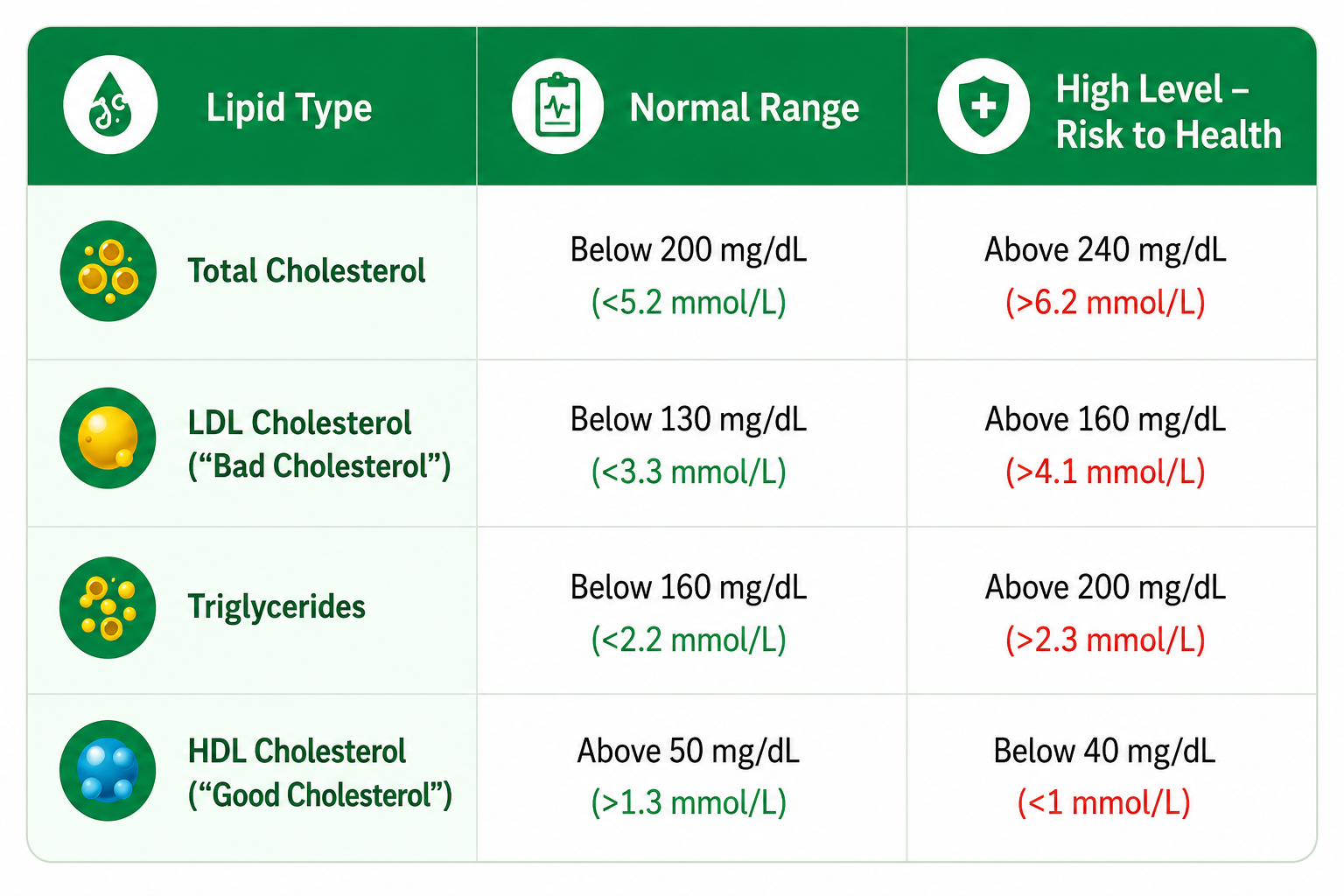
Cholesterol and Triglycerides are transported in the blood by combining with substances called lipoproteins, specifically LDL and HDL.
Cholesterol combined with LDL (denoted as LDL-c) is a type of cholesterol that, when in excess, is harmful to the body. It transports cholesterol into the bloodstream, where it deposits on the blood vessel walls. This is the primary factor in the formation of atherosclerotic plaques.
Cholesterol combined with HDL (denoted as HDL-c) is a type of cholesterol that is beneficial to the body. HDL-c is the “enemy” of atherosclerosis because it has the ability to carry excess cholesterol deposited on the blood vessel walls back to the liver.
Therefore, to detect the condition early, it is necessary to undergo blood tests to check your blood lipid levels. Up to three out of the four components measured in a blood test are harmful when present in excess: LDL-Cholesterol, Triglycerides, and Total Cholesterol. Only one component acts as a protector, which is HDL-Cholesterol.
When reviewing your blood test results, it is crucial to pay attention to the balance between the harmful component (LDL-c) and the protective component (HDL-c). If the harmful components are high while the beneficial one is low, treatment for the blood lipid disorder (dyslipidemia) must be initiated immediately without delay.
An abnormality in any of these blood test indicators means you already have a blood lipid disorder. In addition, other related risk factors must also be taken into consideration, such as co-existing diabetes, advanced age, cardiovascular disease, high blood pressure, and so on.
5. Where can foreigners get a blood lipid test in Da Nang?
Medic Sai Gon Clinic in Da Nang provides blood lipid testing alongside other comprehensive diagnostic packages. When visiting for check-ups and tests, you will receive dedicated and thoughtful consultation from a team of doctors with many years of experience. With over 15 years of experience in the field of medical laboratory services, the clinic is equipped with modern machinery and a team of highly experienced technicians. Medic Sai Gon is a trusted testing facility for clients in the Da Nang area, as well as foreigners living, traveling, and working in Da Nang. The clinic is committed to ensuring maximum satisfaction for all clients who choose us for their health examinations.

MEDIC SAI GON CLINIC IN DA NANG
- Address: 97 Hai Phong Street, Hai Chau District, Da Nang.
- Hotline/ Zalo/ WhatsApp: 0914 496 516