Diabetes usually does not occur suddenly but is the result of a prolonged metabolic disorder, in which insulin resistance is one of the earliest and most crucial signs. When the body becomes less responsive to insulin, the pancreas must increase insulin production to maintain blood sugar at a normal level. In diabetes screening, the HOMA-IR test serves as a tool to evaluate and early detect the risk of prediabetes and type 2 diabetes, enabling timely interventions to protect long-term health.
What is a HOMA-IR (Insulin Resistance) Test?
Insulin resistance is a condition where the body’s cells, particularly in muscle and fat tissues, no longer respond effectively to insulin as normal. To maintain stable blood sugar levels, the pancreas must increase insulin production in larger amounts. If this condition persists, the pancreas gradually experiences a decline in function, increasing the risk of developing type 2 diabetes.
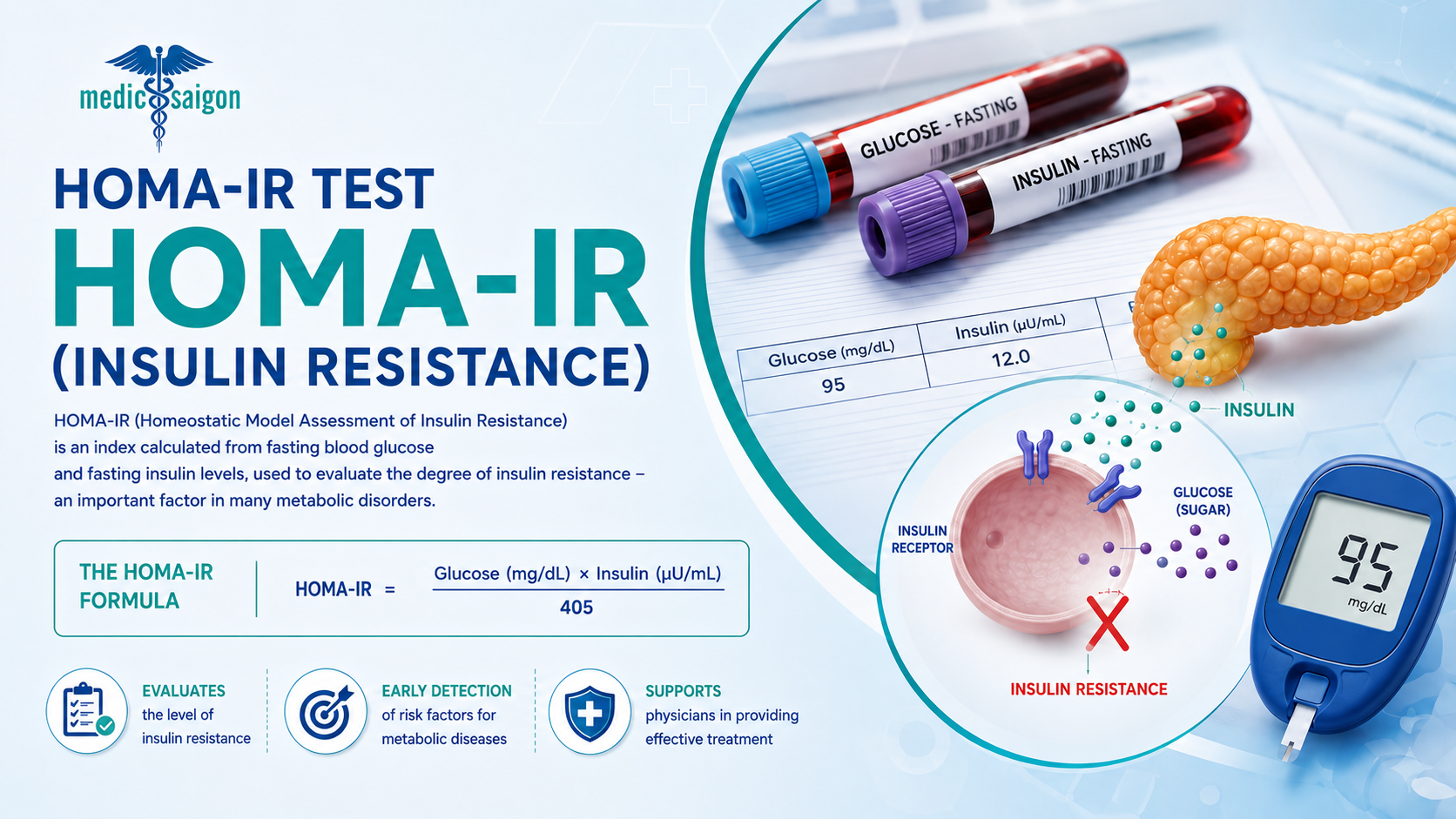
HOMA-IR is an index calculated from fasting glucose and insulin concentrations to evaluate the body’s degree of insulin resistance. By reflecting the relationship between blood glucose and insulin, the HOMA-IR index helps early detect metabolic disorders associated with insulin resistance, even when diabetes has not yet clearly manifested.
See more: Insulin Testing at Medic Sai Gon Clinic in Da Nang
What HOMA-IR Level Is Considered High?
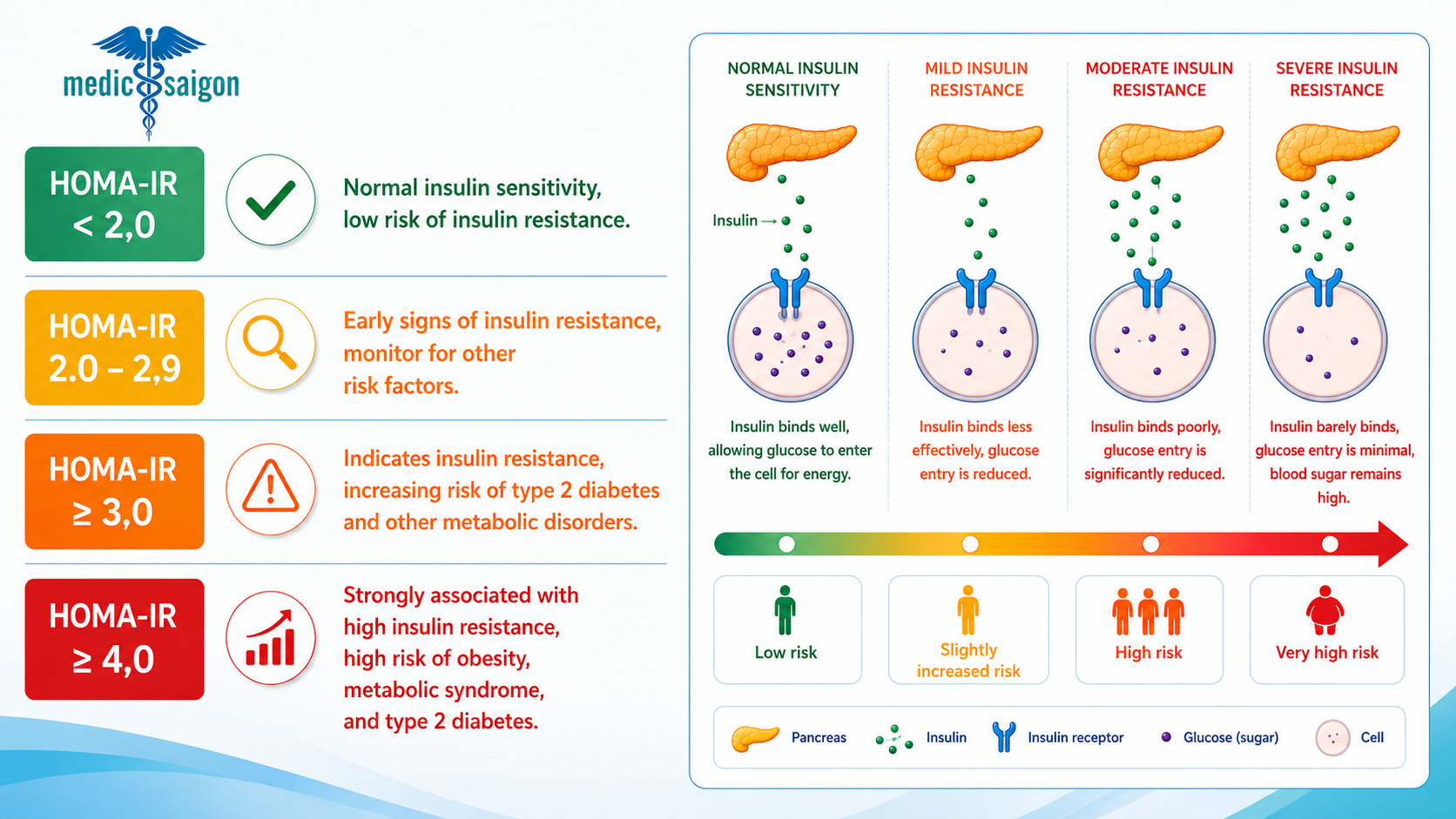
Currently, there is no universally unified HOMA-IR threshold applicable to all individuals, as results may vary depending on age, gender, ethnicity, and testing methodology. However, many clinical references frequently refer to the following levels:
- HOMA-IR < 2.0: Normal insulin sensitivity, low risk of insulin resistance.
- HOMA-IR from 2.0 – 2.9: Mild insulin resistance may begin to appear, requiring further monitoring of other risk factors.
- HOMA-IR ≥ 3.0: Suggests significant insulin resistance, increasing the risk of prediabetes, type 2 diabetes, and metabolic disorders.
- HOMA-IR ≥ 4.0: Typically associated with a high level of insulin resistance, commonly observed in individuals with obesity, metabolic syndrome, or type 2 diabetes.
The HOMA-IR test index should be evaluated alongside fasting blood glucose, fasting insulin, and HbA1c to accurately reflect the metabolic state. Doctors will also consider additional factors such as BMI, waist circumference, and a family history of diabetes. In addition, medical conditions like fatty liver disease, dyslipidemia, or polycystic ovary syndrome (PCOS) can also affect the evaluation.
An elevated HOMA-IR typically appears before an increase in blood glucose. Therefore, this test helps early detect metabolic disorders and the risk of diabetes right from the stage where effective prevention is still possible..
Normal Blood Glucose Levels But Still at Risk for Diabetes
Many people have fasting blood glucose levels within normal limits, but in reality, insulin resistance has already developed. At this stage, the body must produce more insulin to maintain stable blood glucose, so conventional blood glucose tests may not detect any abnormalities yet. If not detected and intervened early, insulin resistance can progress to prediabetes and type 2 diabetes in the future.
For example, an individual with:
- Fasting blood glucose: 5.2 mmol/L
- Fasting insulin: 15 μU/mL
- HOMA-IR ≈ 3.5
Although blood glucose remains within normal limits, this HOMA-IR index suggests insulin resistance and the risk of progressing to type 2 diabetes in the future if no appropriate intervention is taken.
What Signs Indicate the Body Is Resistant to Insulin?
Insulin resistance usually develops silently for many years before being detected. In the early stages, patients may not have clear manifestations, or the symptoms can be easily confused with common health problems. Below are some warning signs that indicate the body is experiencing a reduced response to insulin:
- Weight gain, especially abdominal fat accumulation
- Difficulty losing weight despite dieting or exercising
- Frequently feeling hungry or craving sweets
- Fatigue and sleepiness after meals
- Darkened skin on the neck, armpits, or groin
- Dyslipidemia or fatty liver disease
Not everyone with insulin resistance will exhibit the symptoms above. Many cases still feel completely healthy and are only detected through advanced tests such as HOMA-IR. Therefore, individuals with high risk factors should proactively undergo regular health screenings to detect metabolic disorders early.
See more: Thyroid Function Testing in Da Nang
Individuals Who Need to Undergo a HOMA-IR (Insulin Resistance) Test
Below are the target groups who should undergo a HOMA-IR test at least once a year for diabetes screening:
- Overweight or obese, especially with visceral fat
- Family history of type 2 diabetes
- Women with a history of gestational diabetes or polycystic ovary syndrome (PCOS)
- Individuals with a large waist circumference
- High blood pressure or dyslipidemia
- Frequent fatigue after meals, intense sugar cravings, and difficulty losing weight despite eating less
- Modern children who often consume a lot of sweets, have a sedentary lifestyle, and lack adequate sleep. Chronic sleep deprivation and prolonged stress can affect hormones and increase HOMA-IR levels.
Even in the absence of symptoms, routine HOMA-IR testing every 1–2 years helps early detect insulin resistance, enabling effective nutrition, exercise, and weight control management.
Reputable and Accurate HOMA-IR (Insulin Resistance) Testing in Da Nang
Currently, most clinics and hospitals across Da Nang city offer this type of testing. However, if you are looking for a reputable, fast, and cost-effective testing facility, Medic Sai Gon Clinic in Da Nang is an excellent choice for you.

With over 15 years of experience in the field of medical laboratory services, the clinic is equipped with modern machinery and a team of highly experienced technicians. Medic Sai Gon is a trusted testing facility for clients in the Da Nang area, as well as foreigners living, traveling, and working in Da Nang.
The clinic currently performs HOMA-IR (insulin resistance) testing alongside a comprehensive range of other blood and urine testing services. The clinic is committed to ensuring maximum satisfaction for all clients who choose us for their health examinations.
Contact: MEDIC SAI GON DIAGNOSTIC CLINIC
- Address: 97 Hai Phong Street, Hai Chau District, Da Nang
- Hotline/ Zalo/ WhatsApp: 0914 496 516