In an infertility and subfertility evaluation procedure, testing to assess ovarian endocrine function is mandatory. Progesterone is a hormone that plays an essential role in ovulation, preparing the uterine lining to receive the embryo, and maintaining the stable development of the fetus during the early stages of pregnancy. Progesterone testing not only helps evaluate ovulatory function but also provides critical information regarding a woman’s fertility, thereby enhancing the effectiveness of the diagnosis and treatment process for infertility and subfertility.
What is a Progesterone Test?
Progesterone is a female sex hormone secreted by the ovaries after the menstrual cycle, playing an important role in regulating the female body, the menstrual cycle, and fetal development. Progesterone is primarily produced by the placenta, a woman’s ovaries, and the adrenal glands.
A progesterone test is a serum test used to quantify the concentration of secreted progesterone. Progesterone levels begin to rise when an egg is released from the ovary, increase for a few days, and then either continue to rise during pregnancy or decrease to initiate the menstrual cycle. This test is used to evaluate the quality of the luteal phase, placental function, or ovulation status in women.
The Role of Progesterone Testing in Infertility and Subfertility Evaluation
A progesterone test is one of the key endocrine tests in the evaluation of female infertility and subfertility. This test plays a vital role in:
- Evaluating ovulation
- Assessing luteal function
- Assisting in identifying the causes of subfertility
- Monitoring the effectiveness of infertility treatment
Although significantly valuable in infertility and subfertility evaluations, progesterone levels are not used for independent diagnosis. Combining this index with clinical symptoms, ultrasounds, and other endocrine tests will help physicians make an accurate assessment and design a suitable treatment plan.
Who Should Undergo a Progesterone Test?
A progesterone test is a specific test indicated in the following cases:
- Women with signs of difficulty conceiving: Progesterone levels will help women determine whether there are any abnormalities in their ovulation cycle.
- During pregnancy: This test helps check the health of both the pregnant woman and the fetus.
- Menstrual disorders: Progesterone concentrations fluctuate throughout the menstrual cycle. If the test shows a progesterone level below the reference range, it may indicate poor ovarian function.
- Accurately assessing the risk of miscarriage or ectopic pregnancy by quantifying progesterone levels during the first 10 weeks.
Performing the test at the right time as directed by a doctor will ensure an accurate evaluation of progesterone levels, thereby assisting in the diagnosis of endocrine disorders, monitoring pregnancy, and improving the effectiveness of treatment for infertility and subfertility.
See more: At-Home Laboratory Sample Collection Service for Expatriates
What Do High or Low Progesterone Levels Indicate?
Progesterone concentrations vary throughout each phase of the menstrual cycle, so evaluating the results must be based on the timing of sample collection and the patient’s clinical status.
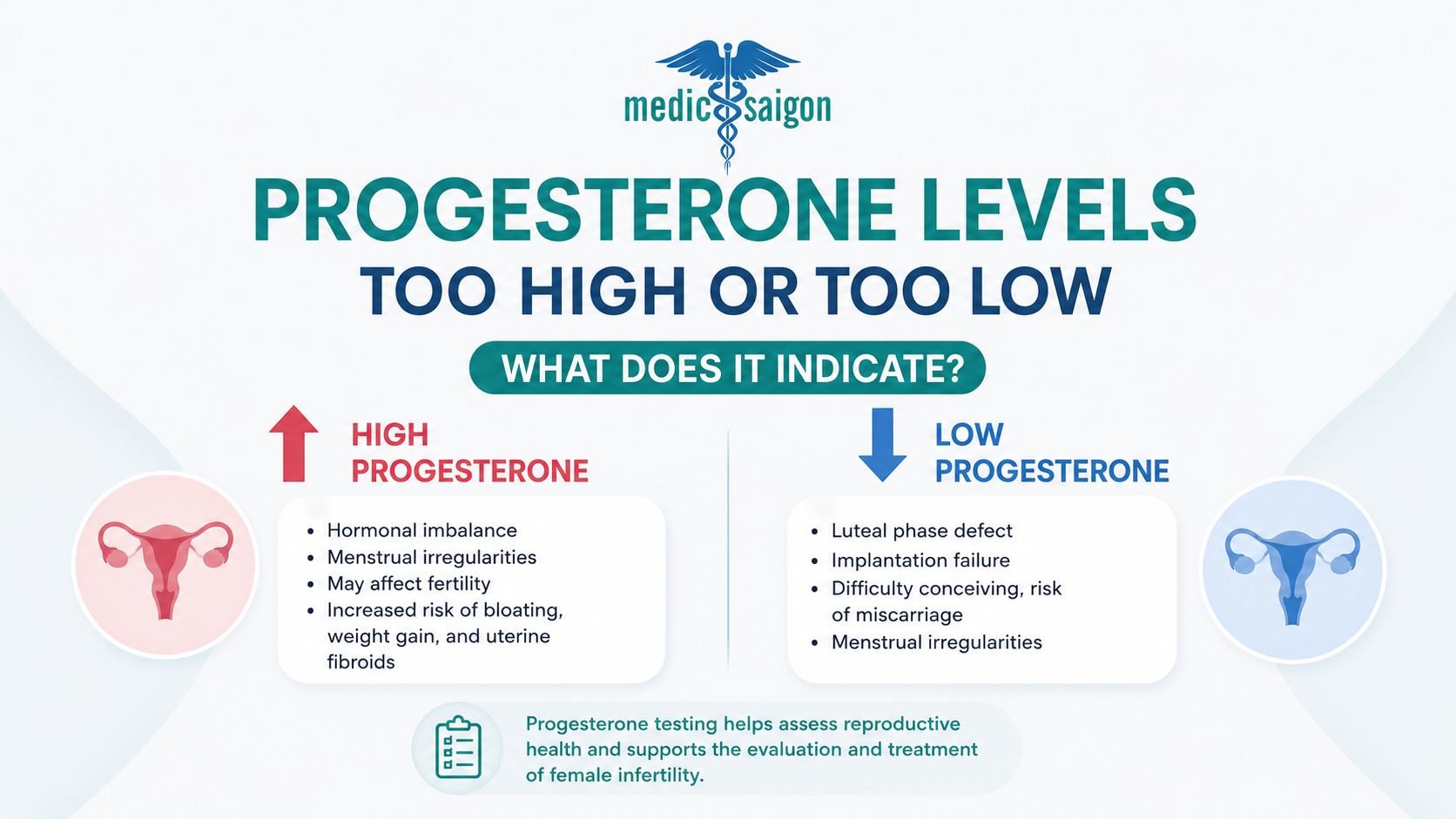
Low progesterone may reflect:
- Absence of ovulation or irregular ovulation.
- Luteal phase deficiency (poorly functioning corpus luteum), which reduces the embryo’s ability to implant.
- Risk of infertility, subfertility, or early miscarriage (when combined with clinical symptoms and other diagnostic tests).
- Endocrine disorders or diminished ovarian function.
High progesterone can be observed in cases of:
- Successful ovulation and a well-functioning corpus luteum.
- Pregnancy, especially during the early stages of gestation.
- Current use of progesterone medications or supplementation therapy.
- More rarely, it may be linked to corpus luteum cysts, adrenal gland disorders, or certain hormone-secreting tumors.
Please note that progesterone test results should not be evaluated in isolation. To reach an accurate conclusion, they must be combined with the timing of sample collection, the menstrual cycle, clinical symptoms, and other endocrine tests such as FSH, LH, Estradiol (E2), AMH, as well as an ultrasound of the uterus and ovaries.
See more: Endocrine Testing for Expatriate Clients at Medic Saigon
When Should a Progesterone Test Be Performed?
The timing of a progesterone test significantly impacts the accuracy of the results. As the concentration of this hormone fluctuates across each phase of the menstrual cycle, the doctor will schedule the sample collection based on the specific clinical objective.
- For women with regular menstrual cycles: Approximately 7 days after ovulation.
- For women with irregular menstrual cycles: The doctor will determine the appropriate timing for blood collection based on the estimated time of ovulation.
- For women undergoing infertility and subfertility treatment: The testing timeline will be designated by the physician on days 2–3 of the menstrual cycle (counting from the first day of menstruation) or tailored to the specific treatment modality (ovarian stimulation, Intrauterine Insemination [IUI], or In Vitro Fertilization [IVF]) to monitor ovulation, evaluate luteal function, and assess the embryo’s capability for implantation support.
Progesterone hormone testing must be performed at the correct time to ensure the best possible treatment outcomes.
Where to Get a Progesterone Test in Da Nang
Currently, most clinics and hospitals across Da Nang city offer this type of testing. However, if you are looking for a reputable, fast, and cost-effective testing facility, Medic Sai Gon Clinic in Da Nang is an excellent choice for you.

With over 15 years of experience in the field of medical laboratory services, the clinic is equipped with modern machinery and a team of highly experienced technicians. Medic Sai Gon is a trusted testing facility for clients in the Da Nang area, as well as foreigners living, traveling, and working in Da Nang.
The clinic currently performs progesterone testing alongside a comprehensive range of other endocrine testing services. The clinic is committed to ensuring maximum satisfaction for all clients who choose us for their health examinations.
Contact: MEDIC SAI GON DIAGNOSTIC CLINIC
- Address: 97 Hai Phong Street, Hai Chau District, Da Nang
- Hotline/Zalo/WhatsApp: 0914 496 516