An AMH (Anti-Müllerian Hormone) test is a key diagnostic tool used to assess a woman’s ovarian reserve. AMH levels are commonly evaluated during reproductive health check-ups to help gauge ovarian response, assist with family planning, or guide assisted reproductive treatments (such as IVF). So, what exactly is an AMH test, and who should consider getting one? Let’s explore with Medic Saigon in the following guide.
What is AMH and what is an AMH test in women?
AMH (Anti-Müllerian Hormone) is a hormone secreted by the follicular cells within the ovaries. It plays a key role in evaluating female fertility, assessing ovarian reserve, and predicting the onset of menopause.

An AMH test measures the concentration of this hormone in the blood. By analyzing AMH levels, healthcare providers can estimate the remaining egg supply, predict the likelihood of natural conception, and assist in diagnosing infertility or planning assisted reproductive technology (ART) procedures such as IUI and IVF.
Who should undergo AMH testing?
AMH testing is not a routine screening procedure; it is typically indicated by doctors in the following cases:
- Women experiencing fertility challenges: Women planning to conceive who have difficulty getting pregnant, or those undergoing an infertility evaluation.
- Preparation for assisted reproduction: Women preparing for assisted reproductive technology (ART) treatments, such as intrauterine insemination (IUI) or in vitro fertilization (IVF).
- Diagnosis of Polycystic Ovary Syndrome (PCOS / PMOS): Women diagnosed with polyendocrine metabolic ovarian syndrome (commonly known as polycystic ovary syndrome or PCOS) — a condition that disrupts normal ovulation and impacts fertility (often evaluated alongside an antral follicle count ultrasound).
- Unexplained menstrual irregularities: Women experiencing irregular periods, oligomenorrhea (infrequent menstruation), or prolonged amenorrhea (absence of menstruation) of unknown cause.
- Ovarian health conditions: Women with conditions affecting the ovaries, such as primary ovarian insufficiency (premature ovarian failure), ovarian cysts, or ovarian cancer.
- Treatment monitoring and family planning: Women monitoring their response to infertility treatment or seeking to determine the optimal timeframe for conception.
However, beyond the specific cases listed above, any woman of reproductive age who wishes to check her ovarian reserve can easily undergo this test directly without requiring a doctor’s referral.
When should an AMH test be performed?
An AMH test is a simple blood test, meaning women can have their blood sample drawn at any point during their menstrual cycle. However, if you are undergoing testing in conjunction with a fertility evaluation, you may choose to perform the AMH test on day 2 or day 3 of your menstrual cycle alongside other reproductive hormone markers such as LH, FSH, E2, and progesterone. This allows for a accurate, comprehensive assessment of your hormonal health while saving time on multiple clinic visits.
How high and low AMH levels impact female fertility
AMH levels reflect a woman’s ovarian reserve and significantly influence her ability to conceive. Elevated AMH levels are commonly associated with polycystic ovary syndrome (PCOS), whereas low AMH levels indicate diminished ovarian reserve or ovarian insufficiency.
What is a normal AMH level?
You can refer to the AMH reference ranges in the table below:
| AMH Level | Reference Assessment |
| < 0,5 ng/mL | Very low ovarian reserve |
| 0,5 – <1,0 ng/mL | Low ovarian reserve |
| 1,0 – 4,0 ng/mL | Typically within the average/normal range |
| > 4,0 ng/mL | High AMH; may be seen in women with a high follicle count, including polycystic ovary syndrome (PCOS) |
As a woman ages, AMH levels naturally decline, which is why age must always be taken into consideration when determining whether a reading is high or low. Furthermore, it is important to understand that having an AMH level above or below the standard reference range does not automatically guarantee pregnancy success, nor does it definitively mean absolute infertility.
For example: An AMH level of 3.88 ng/mL is considered normal for a 32-year-old woman, whereas an AMH level of 1.33 ng/mL in a 43-year-old woman would not necessarily be classified as ovarian insufficiency, as it can be appropriate for her age group.
AMH reflects only part of a woman’s overall fertility
When evaluating reproductive health, physicians do not rely on the AMH test alone. Instead, they combine AMH results with an ovarian ultrasound (to count antral follicles), clinical symptoms (such as weight gain, acne, or hirsutism/excessive hair growth), patient age, and other reproductive hormone tests. This comprehensive approach allows doctors to accurately determine whether a woman has normal reproductive function, Polycystic Ovary Syndrome (PCOS), or Premature Ovarian Insufficiency (POI).
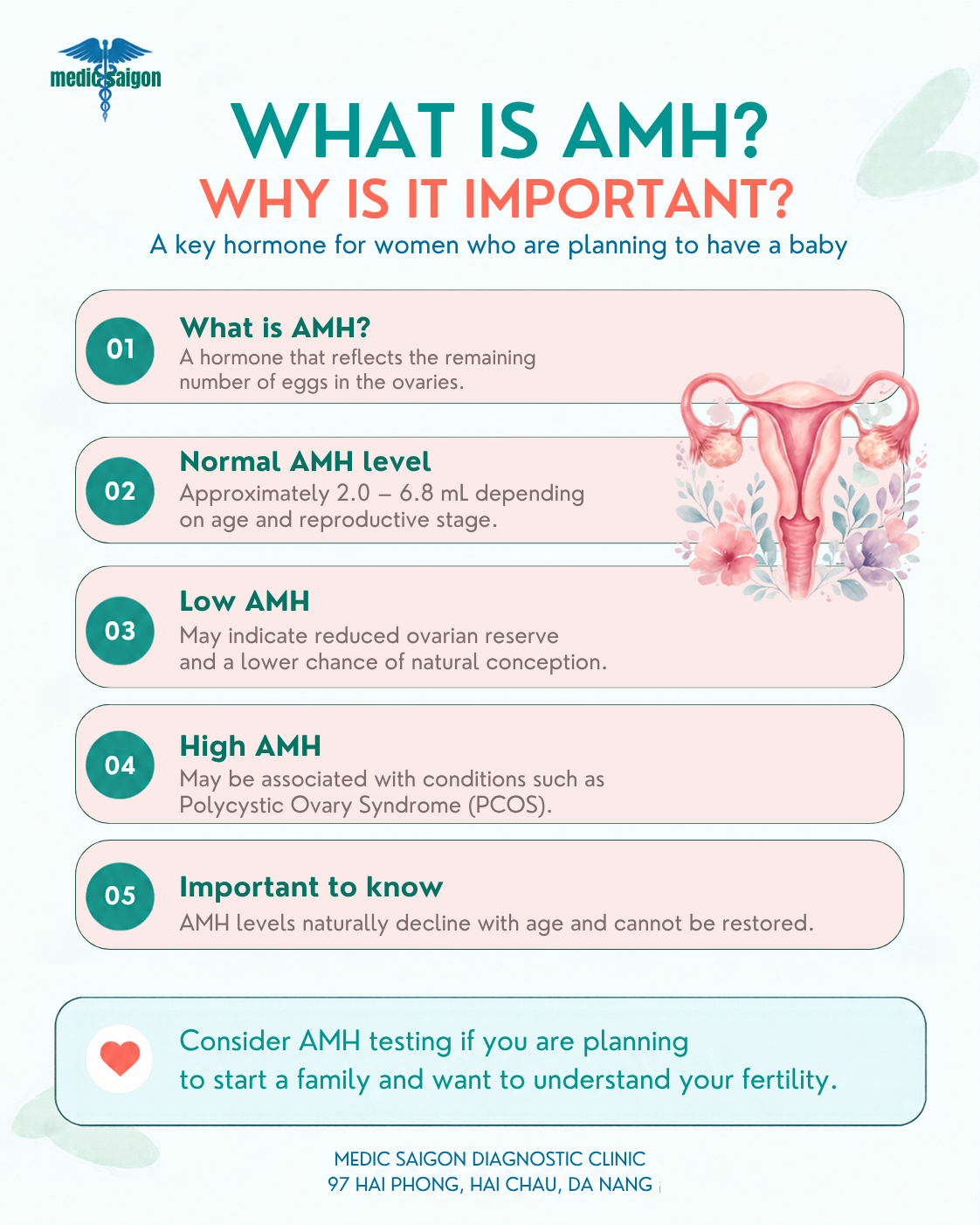
High AMH levels typically point toward polycystic ovaries, which can cause irregular menstrual cycles or prolonged amenorrhea (absence of periods) because follicles fail to mature each month. Without medical guidance, this can significantly lower the chances of natural conception. Low AMH levels indicate diminished ovarian reserve or premature ovarian failure. For younger women who have not yet started a family, low ovarian reserve can lead to fertility challenges or even early depletion of the egg supply before marriage or pregnancy planning.
How much does an AMH ovarian reserve test cost and how long do results take?
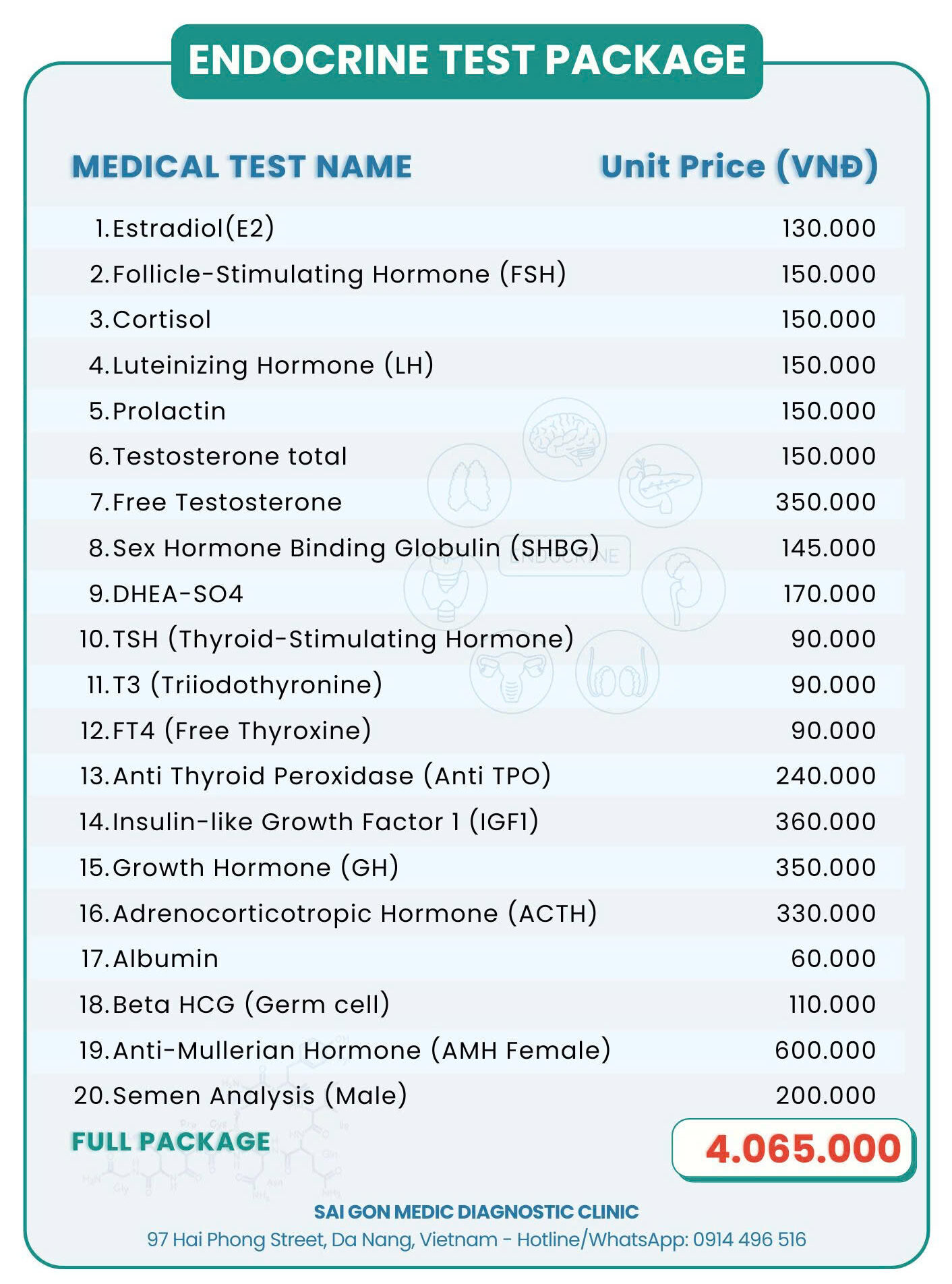
The cost of an AMH test may vary across medical centers depending on the testing method and accompanying services. At Medic Saigon Diagnostic Clinic in Da Nang, this test typically costs 600,000 VND. You can choose to take the test individually or combine it with other hormone tests in the clinic’s reproductive hormone panel.
The blood sample collection process takes only about 10 minutes. Test results are available within 24 hours after sample collection.
Where to get an AMH test in Da Nang?
Most clinics and hospitals in Da Nang offer this test. However, if you are looking for a trusted, fast, and cost-effective facility, Medic Saigon Diagnostic Clinic in Da Nang is an excellent choice.
With over 15 years of experience in clinical laboratory testing, our clinic is equipped with modern diagnostic technology and staffed by a team of highly experienced technicians. Medic Saigon is a trusted testing destination for local residents as well as foreign expatriates, workers, and tourists living in or visiting Da Nang.
The clinic currently provides AMH testing alongside a full range of female reproductive hormone testing services. We are committed to delivering maximum satisfaction and peace of mind when you choose us for your health checks.
MEDIC SAIGON DIAGNOSTIC CLINIC
- Address: 97 Hai Phong, Hai Chau, Da Nang
- Hotline / Zalo / WhatsApp: 0914 496 516