Currently, prostate cancer is one of the most common types of cancer in men, and it is increasingly affecting younger individuals. One of the primary blood tests used to screen for this disease is the PSA test. So, how can we effectively screen and detect prostate cancer early? Does a high PSA level definitely mean you have prostate cancer. Let’s find out with Medic Sai Gon.
What is the PSA test?
The PSA (Prostate-Specific Antigen) test is a blood test aimed at measuring the PSA level. This is a specific antigen produced by the prostate gland, used in the screening, diagnosis, and treatment monitoring of prostate cancer.
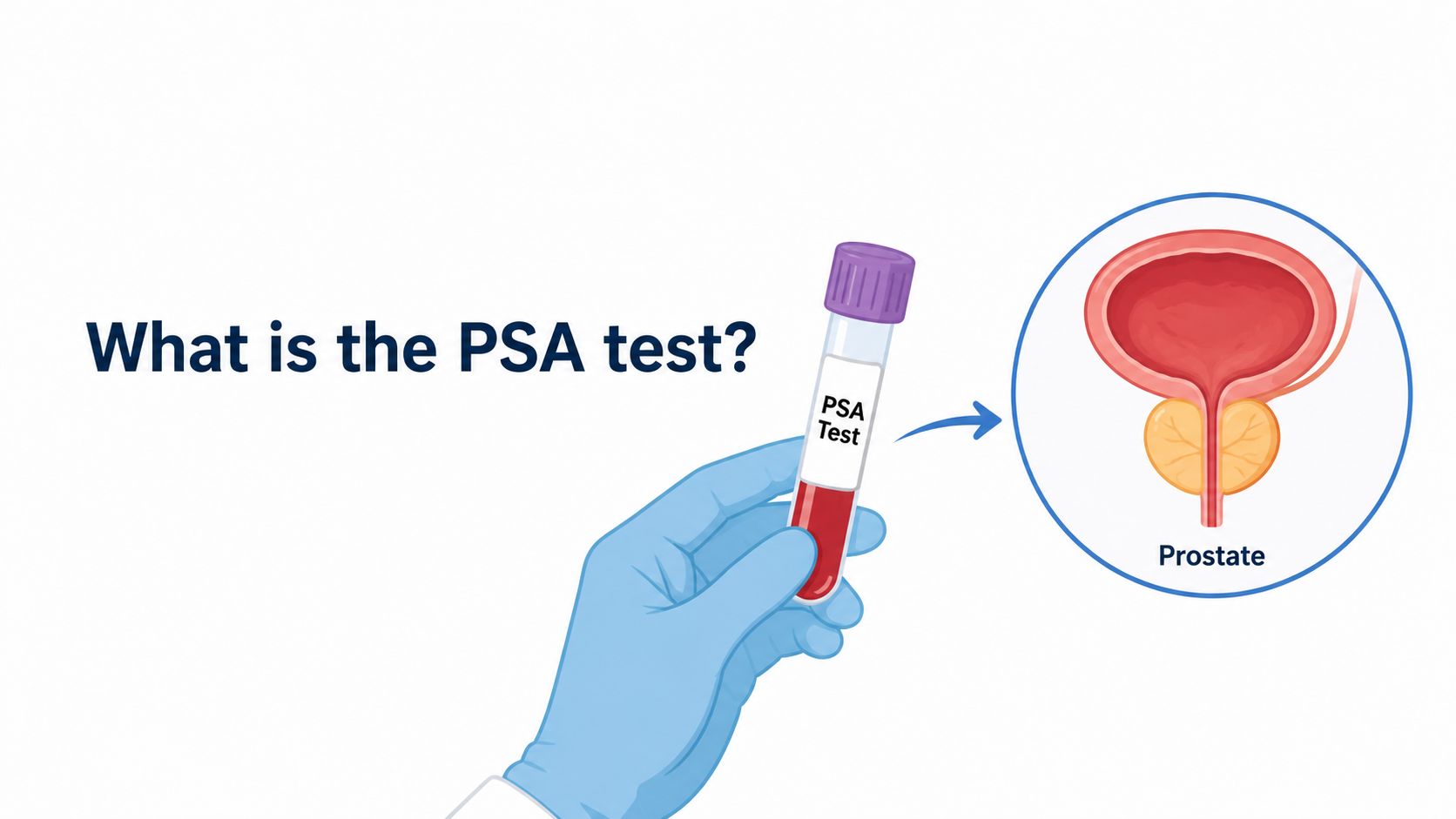
PSA is produced by prostate cells and is present in both healthy individuals and those with cancer. The PSA blood test measures the amount of PSA in a person’s blood. An elevated PSA level can indicate the presence of certain prostate conditions, including cancer.
Initially, this test was used to monitor the progression of prostate cancer in men who had already been diagnosed with the disease. Later, along with the digital rectal exam (DRE), it became a diagnostic tool for prostate cancer in men experiencing abnormal symptoms related to this gland.
Does a High PSA Level Mean Prostate Cancer?
According to many medical studies, there is no specific normal or abnormal PSA level in the blood. PSA levels vary depending on the individual, age, race, and lifestyle.
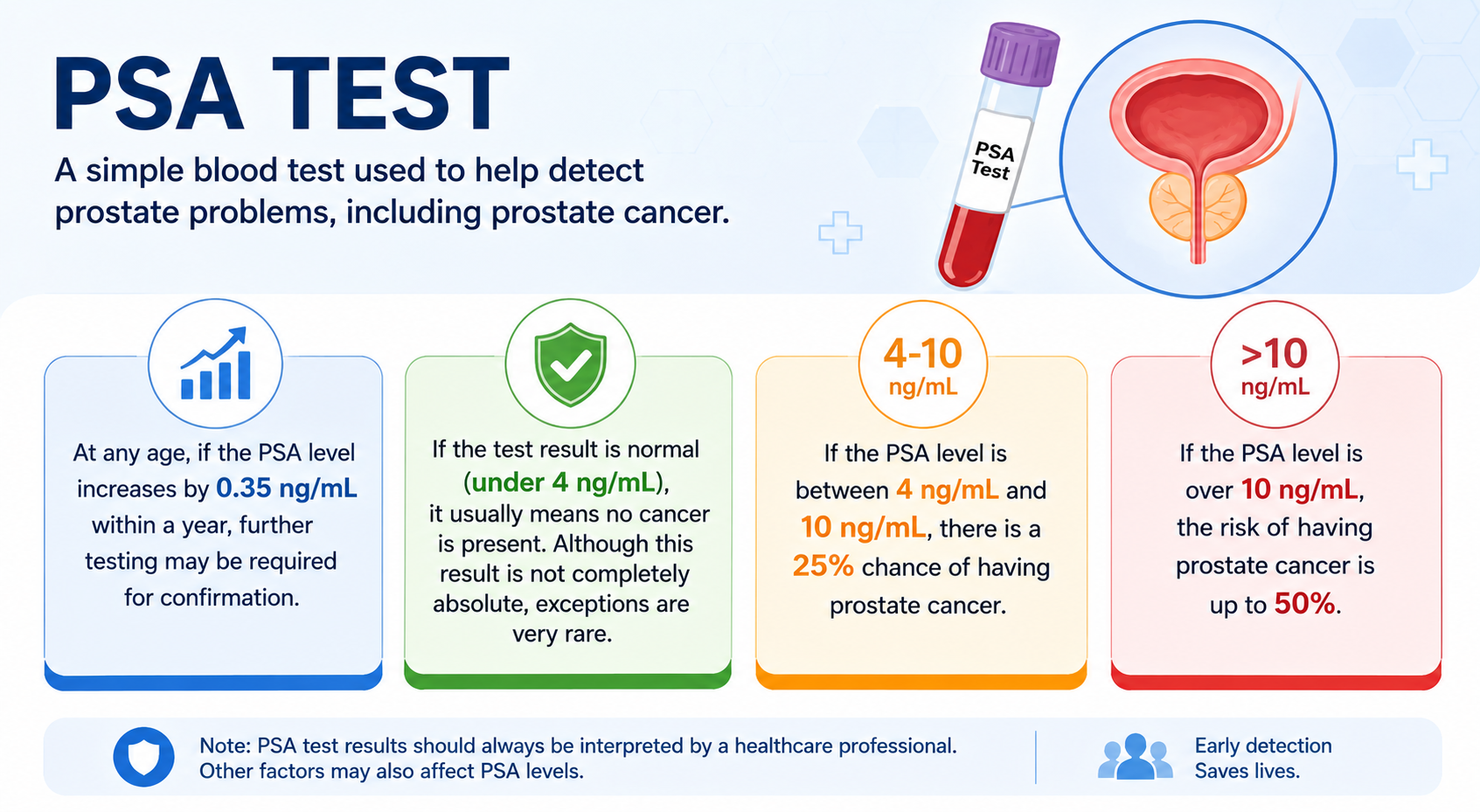
- At any age, if the PSA level increases by 0.35 ng/mL within a year, further testing may be required for confirmation.
- If the test result is normal (under 4 ng/mL), it usually means no cancer is present. Although this result is not completely absolute, exceptions are very rare.
- If the PSA level is between 4 ng/mL and 10 ng/mL, there is a 25% chance of having prostate cancer.
- If the PSA level is over 10 ng/mL, the risk of having prostate cancer is up to 50%.
Understanding your risk for prostate cancer and undergoing regular screening to establish a baseline PSA level is essential.
- Average risk: Begin cancer screening between the ages of 45 and 50.
- Higher risk (individuals with a family history of the disease, inherited genetic mutations, or of African descent): Begin cancer screening at an earlier age, between 40 and 50.
Read more: Infectious Disease Testing and Health Check Services for Foreigners
Who should get a PSA test?
Doctors recommend the PSA test in the following cases:
- Men over 50 with urinary tract issues: The PSA test may be prescribed to assess the risk and actively screen for prostate cancer.
- Newly diagnosed prostate cancer patients: The PSA test (combined with other factors such as tumor stage, etc.) can be used to assess the risk of cancer progression. Based on this, doctors will determine the appropriate treatment methods.
- After prostate cancer treatment: Doctors will periodically monitor PSA levels to evaluate treatment effectiveness, such as the potential for a complete cure, detecting cancer recurrence, or assessing the response to hormonal therapy.
- Individuals with a family history of prostate cancer: They should also undergo the test for cancer screening starting from the age of 40.
Cases of elevated PSA that are not cancer
Not all patients with an elevated PSA test result have prostate cancer. There are many other causes that can lead to an increase in this marker. When preparing for a PSA test, you should clearly communicate with your doctor about all medications, dietary supplements, lifestyle habits, and symptoms you have experienced recently. Factors that can elevate PSA levels include:
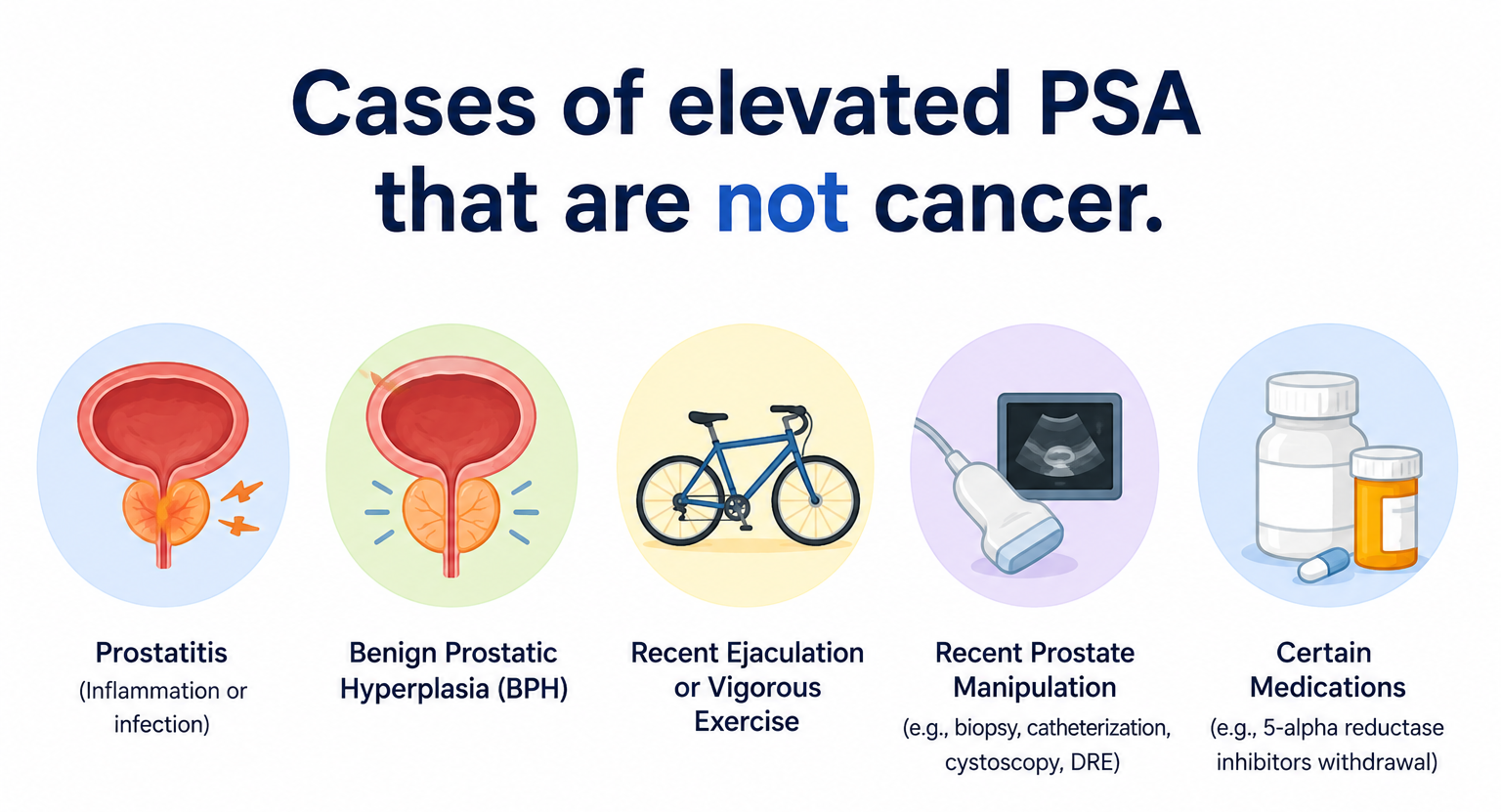
- The natural aging process of the body often causes PSA levels to increase over time.
- Recent sexual activity involving ejaculation can also raise PSA levels. It is recommended to abstain from sexual activity for at least 48 hours prior to a PSA test.
- Benign prostatic hyperplasia (a benign enlargement of the prostate gland) also causes an elevated PSA but is not cancer.
- Prostatitis is an infection of the prostate gland that causes swelling and inflammation; this condition needs to be treated by a doctor.
- Frequent cycling puts pressure on the prostate and can also cause a short-term increase in PSA.
- Testosterone use also increases PSA levels.
- A digital rectal exam (DRE) applies pressure to the prostate, causing a temporary spike in PSA. Therefore, a PSA test should be performed before a DRE.
Is a slightly elevated PSA level a cause for concern?
A slightly elevated PSA result is not immediately alarming but requires regular monitoring. The test is usually repeated in a few months to see if the PSA level has returned to normal. However, if you experience symptoms such as:
- Frequent urination, especially at night
- Difficulty starting urination
- A weak urine stream
- Blood in the urine or semen
- Pain during ejaculation
Monitoring these symptoms and repeating the PSA test is essential.
What to do when PSA levels are consistently high across multiple tests?
If your PSA level remains high after repeated testing over several months, it is a clear sign of an underlying issue. In this case, doctors will recommend one or more additional tests, including:
- Testing the ratio of free PSA to protein-bound PSA: (Free PSA is not attached to other proteins in the blood). If your free PSA ratio is 25% or higher, the cause is usually a non-cancerous condition. However, if your overall PSA is high but the free PSA ratio is under 10%, a biopsy is often recommended to confirm a prostate cancer diagnosis. The free PSA test helps determine whether a prostate biopsy is necessary.
- Other recommended tests to rule out non-cancerous prostate conditions: The Prostate Health Index (PHI) blood test helps determine if a biopsy is likely to detect prostate cancer. The 4Kscore test combines the results of protein-bound PSA and free PSA with human kallikrein 2, a biomarker for prostate tumors.
Based on these test results, your doctor will decide whether to recommend a biopsy. Currently, a biopsy is the most accurate method for diagnosing prostate cancer.
See more: Hereditary Cancer Genetic Screening: Early Risk Detection
Where to get a PSA test in Da Nang?
Currently, most clinics and hospitals across Da Nang City perform this test. However, if you are looking for a reputable, fast, and cost-effective diagnostic center, Medic Sai Gon Clinic in Da Nang is an excellent choice.

With over 15 years of experience in medical laboratory services, our clinic is equipped with modern, advanced technology and a highly experienced team of technicians. Medic Sai Gon is a trusted testing facility for both local residents and international visitors living, traveling, or working in Da Nang.
We provide PSA testing for prostate cancer screening, alongside a comprehensive range of blood and urine test services. Our clinic is committed to ensuring maximum satisfaction for all clients choosing us for their health examinations.
Contact: MEDIC SAI GON DIAGNOSTICS CLINIC
- Address: 97 Hai Phong Street, Hai Chau District, Da Nang
- Hotline/Zalo/WhatsApp: 0914 496 516