Autoimmune polymyositis is a rare inflammatory myopathy that occurs when the immune system mistakenly attacks healthy muscle tissue, causing muscle inflammation and damage. The condition typically manifests as muscle weakness and can impair daily living activities. Early recognition of symptoms and undergoing appropriate diagnostic testing play a crucial role in diagnosing and evaluating the disease status. If you are looking to get tested or learn more about autoimmune polymyositis testing in Da Nang, join Medic Saigon Diagnostic Clinic in Da Nang to explore the details in the article below.
Autoimmune Polymyositis and Related Diagnostic Tests
Polymyositis is a group of autoimmune diseases characterized primarily by chronic inflammation of skeletal muscle bundles, typically presenting with symmetrical proximal muscle weakness accompanied by elevated skeletal muscle enzymes. When polymyositis is accompanied by cutaneous lesions, it is referred to as dermatomyositis. Beyond muscular or cutaneous involvement, patients commonly exhibit extra-muscular manifestations affecting the knees, lungs, cardiovascular system, and gastrointestinal tract.

In elderly individuals, polymyositis and dermatomyositis have a higher rate of association with malignancy, and conversely, malignancy can manifest as dermatomyositis.
The 18-autoantibody panel is an in-depth immunological test designed to assist in diagnosing, classifying, and establishing the prognosis for autoimmune myopathies and associated complications such as interstitial lung disease (ILD). Autoimmune polymyositis testing typically requires a venous blood sample, usually drawn from the patient’s arm.
What typically causes autoimmune polymyositis?
Polymyositis and dermatomyositis belong to the group of autoimmune diseases, occurring when the immune system functions abnormally. Because they are associated with immune system dysregulation, these conditions are also classified as autoimmune inflammatory myopathies. However, to date, the exact underlying cause that triggers the disease remains unclear.
Some studies indicate that the disease may be influenced by various factors, including genetic predisposition, the presence of autoantibodies, and abnormalities in immune regulation. In certain cases, the disease tends to onset or progress during specific times of the year, suggesting that environmental factors and seasonal variations may be involved in disease development.
Additionally, several external factors are considered potential triggers capable of initiating or precipitating the disease in genetically susceptible individuals. These factors include:
- Environmental factors: Exposure to specific environmental agents, such as immune-stimulating triggers, may contribute to promoting disease onset.
- Infectious agents: Certain viruses and bacteria have been studied for their potential to trigger abnormal immune responses.
- Medication use: Certain medications may be associated with immune-mediated muscle inflammation or injury.
Overall, autoimmune polymyositis can develop from a combination of multiple factors rather than stemming from a single isolated cause. Identifying risk factors, combined with clinical examination and performing appropriate autoimmune polymyositis diagnostic tests, assists physicians in accurately evaluating the disease status, determining associated causes, and establishing an appropriate treatment plan.
Who is most at risk of developing autoimmune polymyositis?
Polymyositis and dermatomyositis commonly occur in children aged 10–15 years and adults aged 45–60 years, with occasional cases reported in children under 10 years of age, and are particularly prevalent among patients with pre-existing autoimmune diseases. The conditions are more common in Black individuals than in White individuals, with a female-to-male incidence ratio of 2:1 (twice as common in females as in males).

Clinical Symptoms of Autoimmune Polymyositis
The symptoms of polymyositis and dermatomyositis typically progress gradually over weeks or months, making early detection difficult unless autoimmune polymyositis diagnostic tests are ordered. Patients exhibit fatigue and weight loss, particularly when associated with malignancy. Common clinical manifestations include:
- Muscles: Patients experience myalgia (muscle pain) and muscle fibrosis causing contractures and restricted joint mobility; symmetrical proximal muscle weakness; oropharyngeal muscle weakness leading to difficulty eating, dysphagia (difficulty swallowing), and hoarseness; intercostal muscle weakness resulting in dyspnea (shortness of breath), and eventually leading to muscle atrophy.
- Skin: A key hallmark of dermatomyositis is cutaneous lesions, including violaceous (reddish-purple), scaly macules. In advanced stages, skin atrophy, hyperpigmentation or hypopigmentation, erythema, and periungual telangiectasias (dilated capillaries around the fingernails) may occur.
- Joints: Arthralgia (joint pain) or arthritis commonly occurs in the small joints of the hands and wrists, without causing joint deformity.
- Calcinosis (calcium deposition in the skin and subcutaneous tissues): Patients may palpate firm nodules or observe white deposits when lesions are superficial. Calcification can result in impaired joint mobility.
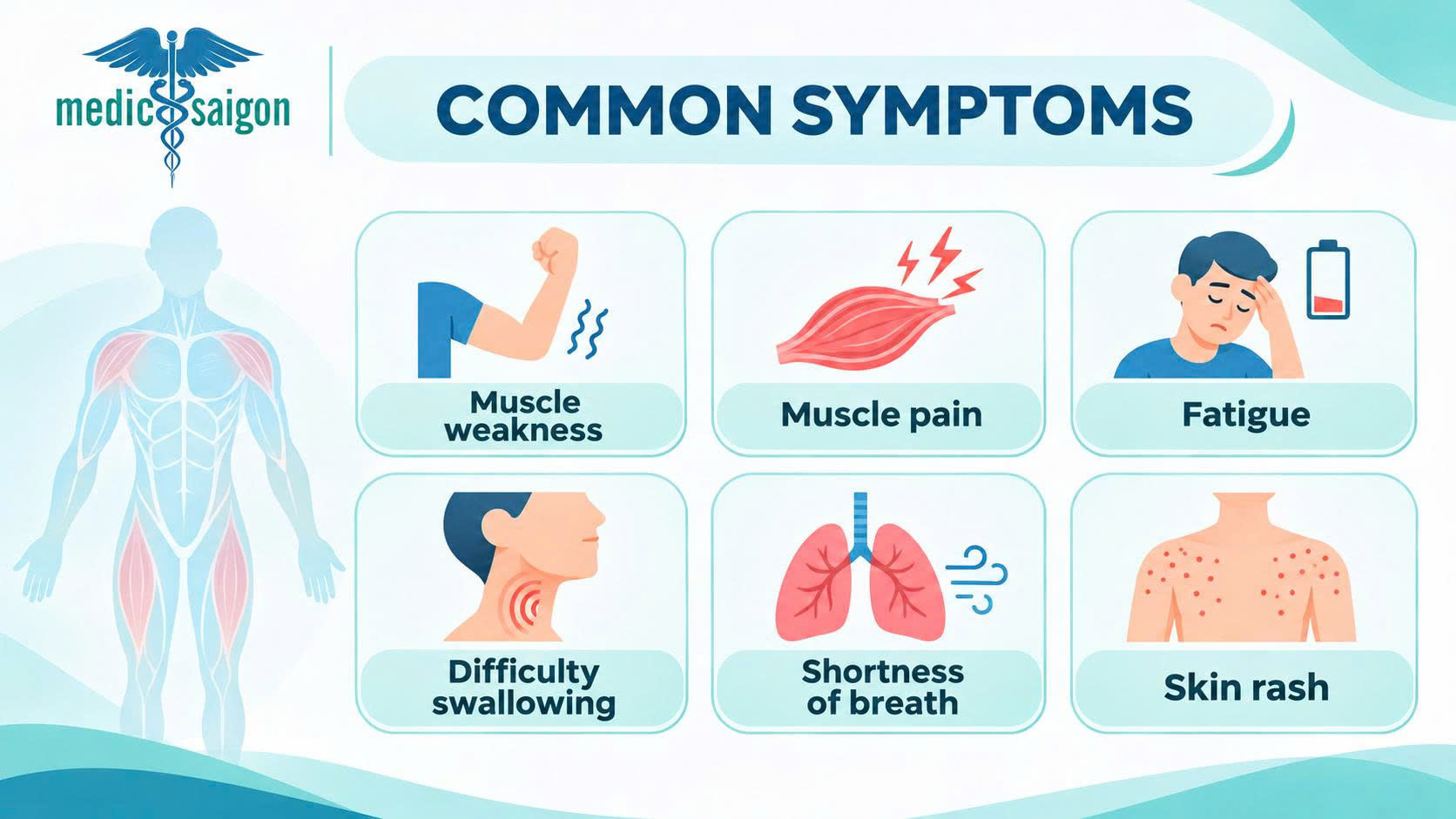
Other manifestations: Patients may develop dyspnea, pulmonary fibrosis, pneumonia, and pleural effusion. Additionally, renal diseases, nephrotic syndrome, and associated malignancies may occur, although these cases are rare.
Where to Get Tested for Autoimmune Polymyositis in Da Nang? How Much Does It Cost?
Currently, most clinics and hospitals in Da Nang offer this type of test. However, if you are looking for a reputable, fast, and cost-effective testing facility, Medic Saigon Diagnostic Clinic in Da Nang is a great choice for you. The 18-autoantibody panel for autoimmune polymyositis costs 2,500,000 VND.
With over 15 years of experience in the medical laboratory testing field, the clinic is equipped with modern machinery alongside a team of highly experienced technicians. Medic Saigon is a trusted testing destination for local residents in the Da Nang area as well as expatriates living, traveling, and working in Da Nang.

The clinic currently offers autoimmune polymyositis testing as well as a full range of outpatient and specialized diagnostic services. The clinic is committed to delivering maximum satisfaction to our valued clients when choosing us as their destination for health check-ups and diagnostic testing.
Home Sample Collection Service in Da Nang
The home testing service at Medic Saigon Diagnostic Clinic in Da Nang offers a convenient health check-up solution for clients who lack the means or find it inconvenient to travel to the clinic. In particular, this service is suitable for:
- The elderly
- Individuals who are ill or bedridden for extended periods
- Individuals recovering after surgery
- Or busy individuals with limited time for travel
Simply contact us to schedule an appointment, and Medic Saigon’s medical staff will visit your home to collect test samples in accordance with proper professional procedures, after which the samples are transported to the laboratory for analysis. Results are delivered promptly via Zalo, email, or other appropriate contact channels, accompanied by consultation and result explanation support whenever needed. Through our home sample collection service, Medic Saigon aims to help everyone proactively monitor their own health and their family’s health conveniently, saving time and effort while maintaining a professional testing process.
Contact: MEDIC SAIGON DIAGNOSTIC CLINIC
- Address: 97 Hai Phong, Hai Chau, Da Nang
- Hotline/Zalo/WhatsApp: 0914 496 516