In micronutrient testing packages for both children and adults, the IGF-1 indicator is an indispensable component. So, what exactly is an IGF-1 test, and what crucial bodily conditions does it reflect? Let’s explore this with Medic Sai Gon in the following article.
What is an IGF-1 test?
IGF (Insulin-like Growth Factor) is a metabolic mediator that stimulates cell growth. This substance consists of two forms: IGF-1 and IGF-2. Among them, IGF-1 is the most commonly used in clinical testing to evaluate pituitary gland disorders and abnormalities in growth hormone production. IGF-1 helps regulate the growth and development of bones, muscles, and soft tissues. Additionally, IGF-1 protects cells from damage, promotes the recovery process, and supports metabolism.
The IGF-1 test is designed to indirectly evaluate pituitary gland disorders and abnormalities in growth hormone production. It is a crucial indicator that reflects the activity of the pituitary gland and the metabolic processes within the body.
See more: Thyroid Function Testing in Da Nang
What Are Normal IGF-1 Levels?
IGF-1 levels vary depending on age and gender. Children and adolescents in their developmental (growth) stages typically have higher levels compared to adults. You can refer to the table below for standard reference ranges:
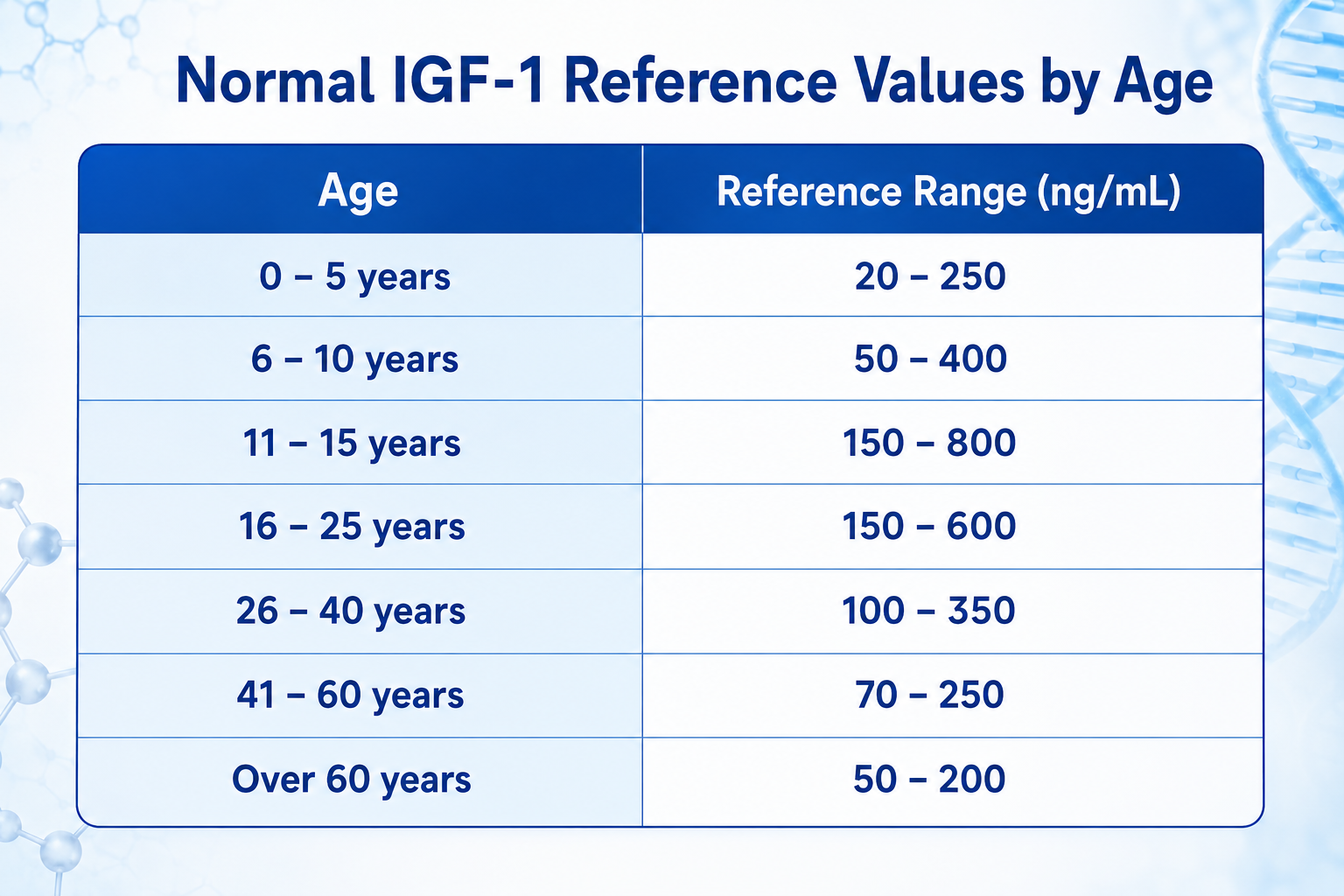
Table: Normal IGF-1 Levels by Age
Please note: Reference ranges may vary between different laboratories due to variations in testing methodologies and equipment. When interpreting your results, always refer to the specific reference range printed on your official laboratory report.
What Conditions Can an IGF-1 Test Help Detect?
By comparing your IGF-1 test results with the normal reference ranges for your age group, any deviation from these standard values may suggest certain health conditions.
When IGF-1 levels are higher than the normal limit for your age, it may be associated with:
- Acromegaly in adults.
- Gigantism in children and adolescents.
- Growth hormone-secreting pituitary tumors.
- Puberty.
- Pregnancy.
Conversely, if IGF-1 levels are lower than normal, it may be observed in cases of:
- Growth hormone (GH) deficiency.
- Hypopituitarism (Underactive pituitary gland).
- Malnutrition or prolonged loss of appetite.
- Chronic liver disease.
- Hypothyroidism (Underactive thyroid).
- Chronic kidney disease.
- Advanced age.
However, an abnormality cannot be diagnosed based solely on a single fixed number, as this indicator is highly dependent on age.
For example:
- A 20-year-old with IGF-1 = 180 ng/mL → May be considered normal.
- A 60-year-old with IGF-1 = 180 ng/mL → Still within normal limits.
- A 15-year-old with IGF-1 = 180 ng/mL → May be at the lower threshold of the puberty range.
Therefore, doctors typically evaluate the results based on:
- Age and gender.
- Clinical symptoms.
- Growth hormone (GH) levels.
- Related endocrine tests.
- MRI scans of the pituitary gland, when necessary.
See more: Vitamin & Mineral Testing for Expatriates at Medic Saigon Da Nang
Who Should Get an IGF-1 Test?
IGF-1 is a crucial indicator typically included in micronutrient testing packages. It is suitable for all clients undergoing a micronutrient profile. In addition, in the specific cases listed below, doctors may prescribe an isolated IGF-1 test to monitor and evaluate the body’s condition:
- Children presenting with symptoms of GH deficiency, such as a slow growth rate and short stature.
- Children experiencing delayed puberty.
- Adults with suspected GH deficiency symptoms, such as decreased bone density, fatigue, reduced exercise tolerance, and lipid disorders (dyslipidemia).
- Patients with suspected hypopituitarism (pituitary insufficiency).
- Routine monitoring of patients undergoing exogenous GH therapy.
- Routine monitoring of patients after pituitary tumor treatment (via surgery, chemotherapy, or radiotherapy) to assess for tumor recurrence.
- More rarely, an IGF-1 test may be ordered alongside a GH suppression test when evaluating a child with symptoms of gigantism or an adult showing signs of acromegaly.
Where to Get an IGF-1 Test in Da Nang?
Currently, most clinics and hospitals across Da Nang city offer this type of testing. However, if you are looking for a reputable, fast, and cost-effective testing facility, Medic Sai Gon Clinic in Da Nang is an excellent choice for you.
With over 15 years of experience in the field of medical laboratory services, the clinic is equipped with modern machinery and a team of highly experienced technicians. Medic Sai Gon is a trusted testing facility for clients in the Da Nang area, as well as foreigners living, traveling, and working in Da Nang.
The clinic provides a comprehensive micronutrient testing panel for both children and adults, which includes the IGF-1 test to evaluate the normal functioning of the pituitary gland and the body’s growth hormone production. We also offer a full range of other blood and urine testing services. The clinic is committed to ensuring maximum satisfaction for all clients who choose us for their health examinations.
Contact: MEDIC SAI GON DIAGNOSTIC CLINIC
- Address: 97 Hai Phong Street, Hai Chau District, Da Nang
- Hotline/ Zalo/ WhatsApp: 0914 496 516