Helicobacter pylori (H. pylori) is a common bacterium found in humans and is recognized as the primary cause of various stomach-related conditions. Traditionally, testing for H. pylori is often performed in conjunction with a gastroscopy (endoscopy). However, for many expats and tourists in Vietnam, undergoing an invasive endoscopy is not their preferred choice. The H. pylori Breath Test has emerged as a highly effective, comfortable, and non-invasive alternative to conventional testing methods.
At Medic Sai Gon Clinic, our H. pylori breath test is conducted quickly, painlessly, and completely stress-free. We guarantee highly accurate results, providing our international clients with absolute peace of mind during their stay or travels in Vietnam.
What is Helicobacter pylori (H. pylori)?
H.pylori is a Gram-negative, spiral-shaped bacterium that infects and thrives within the inner mucous layer of the human stomach. While most microorganisms are quickly destroyed by harsh stomach acid, H. pylori flourishes by producing a large amount of a specific enzyme called urease. This enzyme helps neutralize the surrounding acid, allowing the bacteria to adapt and survive perfectly in the gastric environment.

What is Helicobacter pylori (H. pylori)?
Currently, the infection rate of Helicobacter pylori in the community is remarkably high. H. pylori infection is a major cause of several serious conditions, including chronic gastritis, peptic ulcers (stomach ulcers), gastric cancer, and various other gastrointestinal disorders.
Therefore, patients experiencing any stomach or intestinal symptoms are highly recommended to undergo an H. pylori test for timely diagnosis and treatment.
1.1. Is Helicobacter pylori (H. pylori) contagious?
Yes, H. pylori is highly contagious and can spread easily within the community. It is primarily transmitted through the following three main routes:
- Oral-to-Oral Transmission: This is the most common mode of transmission. The bacteria can spread through direct contact with the saliva or gastrointestinal secretions of an infected person (for example, through kissing, or sharing food, drinks, and utensils).
- Fecal-to-Oral Transmission: H. pylori is excreted in feces, which can become a source of community spread if sanitation is poor. Lifestyle habits, such as consuming raw or improperly washed foods, or drinking contaminated water, can easily lead to an H. pylori infection.
- Other Routes (Cross-Contamination): Infection can also occur through the use of improperly sterilized shared medical equipment, such as gastric endoscopes, ENT (Ear, Nose, and Throat) scopes, or dental instruments.
1.2. What are the common symptoms of an H. pylori infection?
Many individuals infected with H. pylori can live perfectly healthy lives without ever experiencing any clear symptoms. In these cases, the bacteria simply reside in the body without causing immediate harm.
However, for some patients, the infection can trigger symptoms associated with gastritis or stomach ulcers. Common signs include: abdominal pain or an aching sensation in the stomach (especially after eating), nausea, loss of appetite, frequent heartburn, bloating, bad breath (Halitosis), unexplained weight loss.
Warning Signs of a Severe or Prolonged Infection: If the H. pylori infection is left untreated for a long time, it can lead to severe complications. You should seek immediate medical attention if you experience any of the following distinct symptoms:
- Severe and persistent abdominal pain
- Difficulty swallowing (Dysphagia)
- Bloody or black, tarry stools
- Vomiting blood, or vomit that looks like coffee grounds
2. H. pylori Testing Methods
Currently, there are three primary clinical methods used to detect an H. pylori infection:
- Gastric Endoscopy with Biopsy: A procedure where a flexible tube is inserted to examine the stomach lining. A small tissue or gastric fluid sample is collected to test for the presence of the bacteria.
- Blood Test: A blood sample is drawn to check if your immune system has produced antibodies against H. pylori. A positive result indicates that you have these antibodies, meaning you either currently have the infection or were infected in the past.
- Urea Breath Test (UBT): A simple, non-invasive breath test to detect active H. pylori bacteria in the stomach.
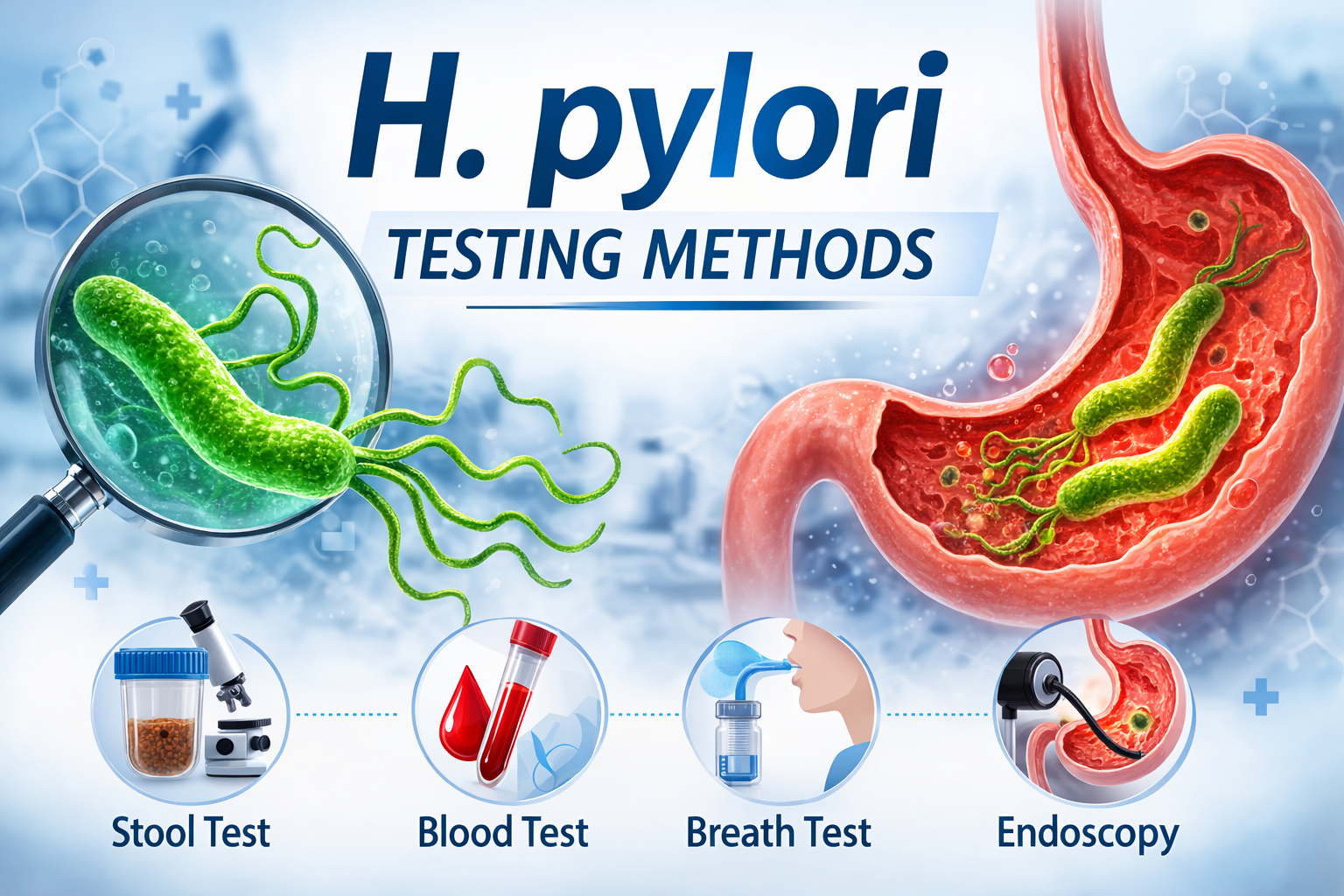
H. pylori Testing Methods
Why choose the Breath Test? Traditionally, H. pylori testing has gone hand-in-hand with gastric endoscopy. For many patients suffering from stomach and duodenal issues, this invasive procedure can be a daunting and uncomfortable experience. In fact, this anxiety is one of the main reasons why patients often hesitate to get re-tested after completing their medication. Fortunately, you can now easily check for an active infection using the H. pylori Breath Test. Today, it stands out as one of the most accurate, patient-friendly, and convenient methods available, especially for monitoring the success of your H. pylori eradication therapy.
3. How does the H. pylori Breath Test work? (The Principle of UBT)
Before testing for stomach H. pylori bacteria, the patient will take a pill or a solution containing Urea tagged with Carbon isotope C13 or C14. If H. pylori is present in the stomach, the bacteria will produce the urease enzyme and hydrolyze the ingested Urea into Ammonia and Carbon dioxide.
This Carbon dioxide with the C13 or C14 isotope is absorbed into the bloodstream and exhaled through the lungs. The amount of C13 or C14 exhaled in the tester’s breath will be measured. From this, it can be determined whether H. pylori bacteria are active (producing urease) in the stomach.
This test has a high accuracy rate of up to 95%, is non-invasive, and painless. The C13 Urease test can be applied to children under 8 years old and pregnant women. It has a fast testing time and is much more cost-effective compared to other H. pylori testing methods.
See more: Infectious Disease Testing and Health Check Services for Foreigners
4. H. pylori breath test for early detection of bacteria causing stomach ulcers
The H. pylori test is a simple procedure recommended to be performed periodically even when the body does not have any symptoms.
4.1. When is an H. pylori breath test needed?
The H. pylori breath test is recommended for patients with the following conditions:
- Gastrointestinal-associated lymphoma
- A history of stomach or duodenal ulcers
- Previous endoscopic treatment for early gastric cancer
- Unexplained iron deficiency anemia
- Idiopathic thrombocytopenic purpura (ITP)
- Having family members with stomach cancer
- Long-term use of aspirin/NSAIDs
- Functional dyspepsia
4.2. What to prepare before an H. pylori breath test?
It is necessary to fast and avoid carbonated drinks, sweets, and acidic or basic foods and drinks for 4-6 hours before taking the H. pylori breath test. The best time is in the morning after an overnight fast. Similar to other H. pylori testing methods, the stomach H. pylori test should only be conducted after stopping antibiotics for ≥ 4 weeks and stopping acid-suppressing medications for ≥ 2 weeks.
Discuss with your doctor any medical conditions you currently have, your history of drug allergies, or if you are pregnant. If you are taking medication for any other condition, do not stop taking it on your own without consulting your doctor first.
4.3. Procedure for the H. pylori breath test
Step 1. The tester is instructed to blow into the first H. pylori test bag before taking the medication.
Step 2. Then, the tester takes a pill containing the C13 isotope or a solution containing C13 and waits for 30 minutes before blowing for the second time. During the 30-minute wait, the patient should limit talking to prevent gas escape.
Step 3. After 30 minutes, the tester blows into the second test bag. The average blowing time is 5-10 minutes, depending on the volume of breath each person exhales.
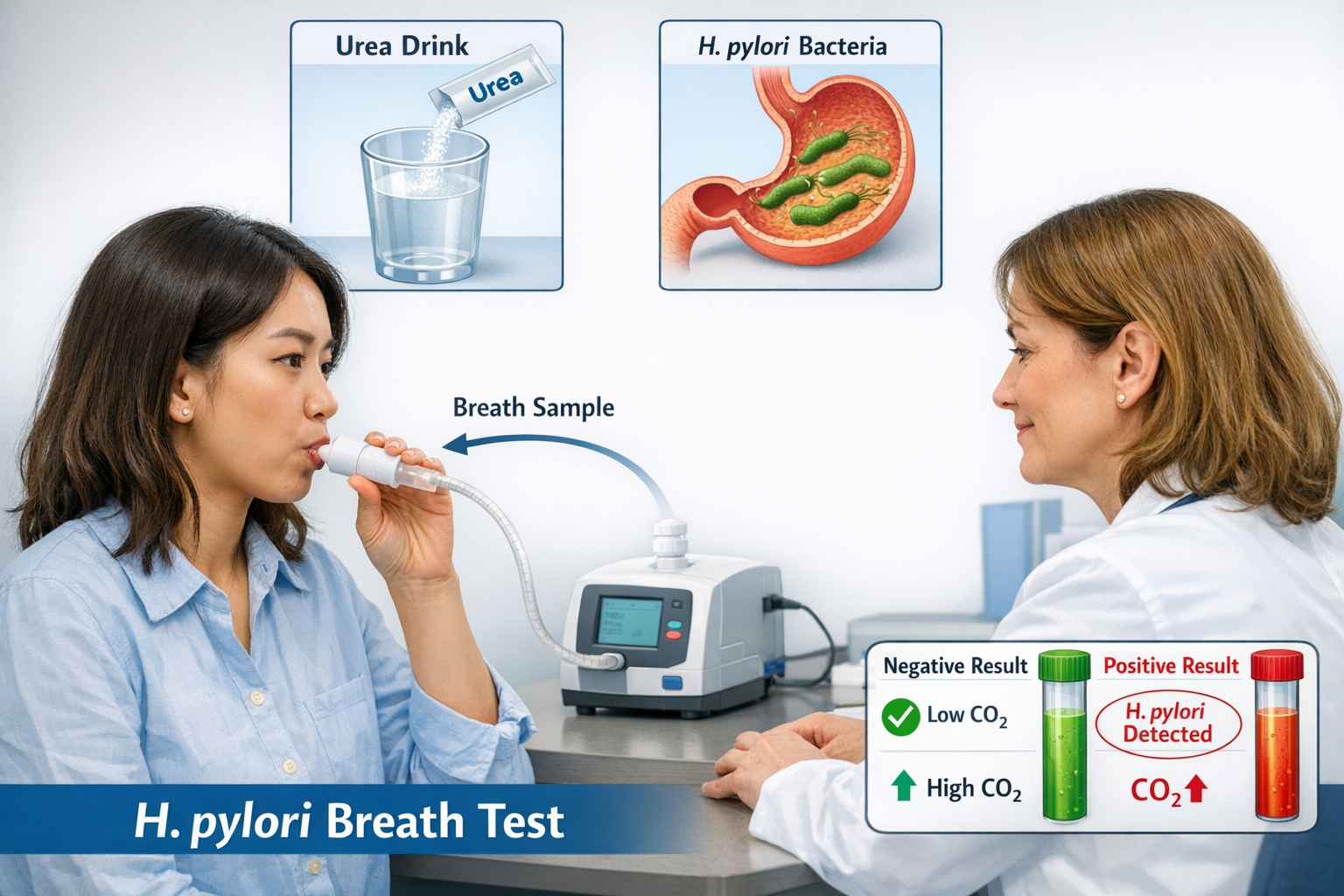
Procedure for the H. pylori breath test
Afterward, the technician will operate the equipment to measure the concentration of the tagged Carbon. The results will then be informed to the tester.
4.4. Necessary precautions when performing the H. pylori breath test
Some cases that cause the H. pylori breath test to give false results:
- The patient blows too early without waiting enough time after taking the medication.
- The patient is using antibiotics, proton pump inhibitors… and performs the H. pylori breath test without stopping the medication for a sufficient amount of time.
- The best time to test is early in the morning, right after waking up and before eating anything. Or you need to fast for at least 4 hours to get the most accurate test results.
**Note: The following individuals should consult a doctor when taking an H. pylori test:
- Pregnant women and children under 8 years old.
- People without symptoms of stomach or duodenal ulcers.
- The elderly.
- People with heart or lung diseases who are taking medication.
- People who are allergic to medication.
5. Where to get H. pylori testing for foreigners in Da Nang
Currently, in Da Nang, there are many hospitals and clinics providing H. pylori testing services with various methods such as qualitative and quantitative, depending on the patient’s testing needs. However, for foreign customers, gastric endoscopy is sometimes not a popular choice. At the same time, the capacity to receive and support foreign patients at some major hospitals in the area is still limited.
With a simple test like the H. pylori breath test, choosing testing clinics in Da Nang city becomes a top priority for foreign visitors. And Medic Sai Gon Diagnostic Clinic is one of those reputable addresses.
Advantages of Medic Sai Gon in Da Nang

Advantages of Medic Sai Gon in Da Nang
Coming to the clinic, you will receive detailed advice on your health condition and perform the H. pylori breath test quickly, safely, and accurately under the guidance of a team of experienced and dedicated doctors and medical staff.
You may need: At-Home Laboratory Sample Collection Service for Expatriates
Notably, the entire consultation and communication process is conducted in English, helping foreign customers easily exchange information and clearly understand their health condition.
Test results can be delivered through various flexible methods, convenient for international customers, especially tourists staying in Da Nang for a short time.
Contact the Clinic for timely support.
Medic Sai Gon Clinic – 97 Hai Phong, Hai Chau, Da Nang.
Hotline/Zalo/WhatsApp: 0914 496 516