In infertility treatment, repeated treatment failures, or recurrent pregnancy loss, alongside factors such as hormones, egg and sperm quality, or reproductive disorders, chromosomal abnormalities should also be considered. Karyotype chromosomal testing analysis helps evaluate the number and structure of chromosomes, assisting in identifying underlying genetic causes and guiding appropriate treatment. Join Medic Saigon to learn more about this test in the article below.
What is Karyotype Chromosome Testing?
A Karyotype test, or chromosomal analysis, is a method used to analyze an individual’s complete set of chromosomes to detect abnormalities in chromosome number and structure.

In a healthy individual, each cell contains 46 chromosomes, arranged into 23 pairs. These include 22 pairs of autosomes and 1 pair of sex chromosomes (XX in females, XY in males). Any change in the number or structure of chromosomes can lead to genetic syndromes or related medical conditions.
By performing this test, doctors can identify chromosomal abnormalities, diagnose the underlying cause of a disease, provide a prognosis, establish an appropriate treatment plan, and support genetic counseling for patients and their families.
See more: FSH Hormone Testing in Infertility Treatment in Da Nang
When is Karyotype Testing Indicated?
Chromosomal analysis is indicated in the following cases:
- Infertility, biochemical pregnancy, or recurrent miscarriages to identify underlying causes related to chromosomal abnormalities.
- Children with signs of congenital anomalies such as physical malformations, or delays in physical or intellectual development.
- Suspected genetic syndromes such as Down syndrome (Trisomy 21), Edwards syndrome (Trisomy 18), or Patau syndrome (Trisomy 13), following screening results from NIPT or nuchal translucency measurements.
- Hematological conditions and cancers including acute leukemia, myelodysplastic syndromes, and pre- or post-bone marrow transplantation (in these instances, the test is performed using a bone marrow sample).
- Premarital or prenatal genetic counseling to evaluate the risk of congenital birth defects.
Significance of Karyotype Testing in Infertility Treatment
Chromosomal analysis is ordered to detect genetic abnormalities, helping confirm or diagnose general genetic disorders as well as specific syndromes that can cause infertility. 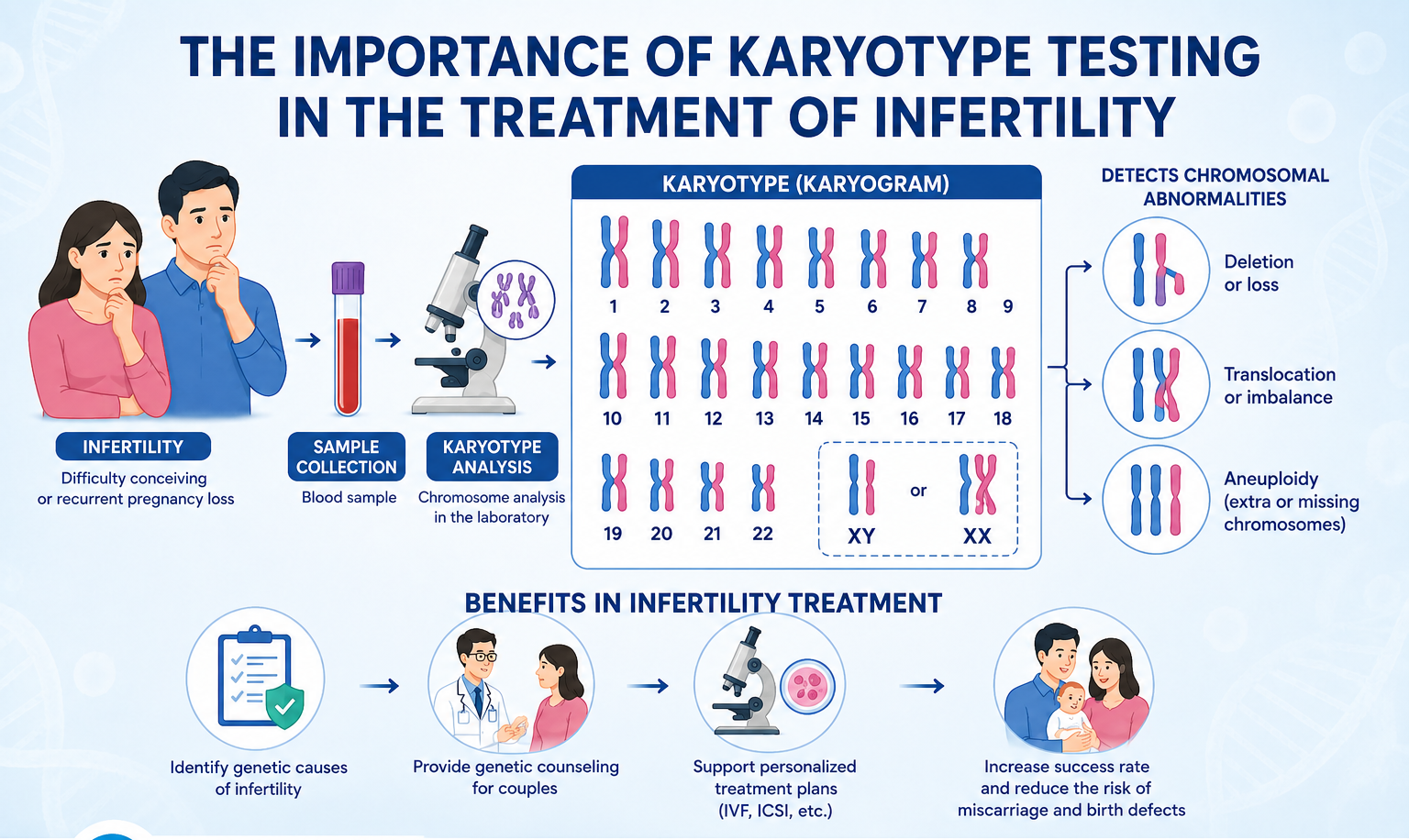
- Couples experiencing infertility recommended for couples unable to conceive naturally after over a year of unprotected intercourse.
- Severe male factor infertility indicated when a semen analysis shows an absence of sperm (azoospermia) or an extremely low sperm count.
- Couples undergoing assisted reproduction (IUI/IVF) performed simultaneously for both partners when clinical indications or risk factors are identified.
- Unexplained pregnancy losses and treatment failures plays a vital role in identifying the underlying causes of unexplained miscarriages, stillbirths, chemical pregnancies, and repeated IVF failures.
If a Karyotype abnormality is detected, the result does not mean “it is impossible to have children.” Instead, doctors will use the findings to advise on treatment options and select an appropriate reproductive strategy for the patient. Depending on the specific type of abnormality, doctors may:
- Provide genetic counseling for the couple.
- Recommend IVF/ICSI in suitable cases.
- Combine preimplantation genetic testing (PGT) to select appropriate embryos prior to transfer.
- Perform prenatal diagnosis during pregnancy.
Advise on alternative reproductive options in special cases, such as using eggs or sperm from healthy donors.
How Karyotype Testing Is Performed ?
Karyotype testing can be performed on adults, children, and newborns. Typically, three main types of samples are used for this test:
- Venous blood sample: This is the most common sample type used for karyotype testing.
- Cheek swab (Buccal swab): A swab is inserted into the mouth and rubbed against the inner cheek to collect cell samples.
- Bone marrow sample: Used when evaluating certain types of cancer or blood disorders. Bone marrow is the soft, spongy tissue found inside bones, and samples are most commonly collected from the back of the hip bone.
See more: At-Home Laboratory Sample Collection Service for Expatriates
How Much Does a Karyotype Test Cost? How Long Does It Take to Get Results?
The cost of chromosomal analysis can vary depending on the medical facility, testing methods, and accompanying services. Typically, this test costs 1,500,000 VND at Medic Saigon Clinic in Da Nang.
Sample collection takes about 15 minutes, during which a small blood sample is drawn. Results are available within 21 days after collection. Fasting is not required for this test, and patients who cannot visit the clinic in person can schedule home sample collection. Results are delivered via Zalo, email, or in person, after which doctors will provide tailored medical advice based on the findings.
Where to Get Karyotype Chromosome Testing in Da Nang?
Currently, several hospitals and laboratories across Da Nang City perform Karyotype chromosome testing, including Medic Saigon Clinic in Da Nang. With over 15 years of experience in medical diagnostics and state-of-the-art equipment, the clinic is committed to delivering accurate, high-quality testing services and dedicated consultations.
To schedule a test, please contact the clinic via hotline/Zalo at 0914 496 516 for guidance and appointment booking.
Medic Saigon Clinic in Da Nang
- Address: 97 Hai Phong, Hai Chau, Da Nang
- Hotline/Zalo: 0914 496 516